
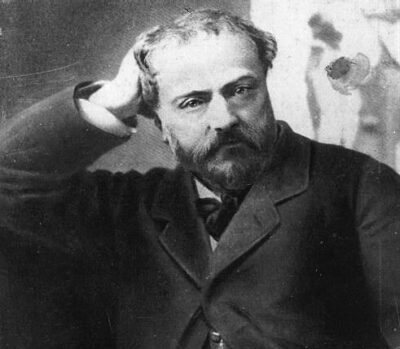
Emmanuel Chabrier
Emmanuel Chabrier was a French Romantic composer and pianist. Born January 18, 1841, in Ambert. Died September 13, 1894, in 9th arrondissement of Paris. Known for Le roi malgré lui, Bourrée fantasque and España, rhapsody for orchestra. Educated at Lycée Saint-Louis.
Facts
17 facts · 2 confirmed by two sources · 4 cited · 11 from one source
Where this comes from
Papalocal keeps its own record. It started from these sources; what each one said is kept here as it was copied, so a change on their side never changes this page by itself. Tap one to read its version.
What Wikidata says · copied November 16, 2026 · revision 2567599364
- Described as
- French Romantic composer and pianist
- Other names
- Alexis-Emmanuel Chabrier, Emmanuel Claude Alexis Chabrier, Alexis Emmanuel Chabrier
- Born
- January 18, 1841 · 15 references
- Died
- September 13, 1894 · 15 references
- Born in
- Ambert · 2 references
- Died in
- 9th arrondissement of Paris · 2 references
- Buried in
- Montparnasse Cemetery
- Cause of death
- syphilis
- Name at birth
- Alexis-Emmanuel Chabrier · 1 reference
- Citizen of
- France
- Occupation
- composer · 1 reference; pianist
- Education
- Lycée Saint-Louis
- Instrument
- piano
- Known for
- Le roi malgré lui; Bourrée fantasque; España, rhapsody for orchestra
- Field
- classical music; opera
- Wikipedias with a page
- 37
Wikidata item Q313374 (wikidata.org/wiki/Q313374), public domain (CC0). Copied November 16, 2026.
What Wikipedia says · copied November 16, 2026 · revision 1376333198
Alexis-Emmanuel Chabrier (French: [ɛmanɥɛl ʃabʁie]; 18 January 1841 – 13 September 1894) was a French Romantic composer and pianist. His bourgeois family did not approve of a musical career for him, and he studied law in Paris and then worked as a civil servant until the age of thirty-nine while immersing himself in the modernist artistic life of the French capital and composing in his spare time. From 1880 until his final illness he was a full-time composer.
Although known primarily for two of his orchestral works, España and Joyeuse marche, Chabrier left a corpus of operas (including L'étoile), songs, and piano music, but no symphonies, concertos, quartets, sonatas, or religious or liturgical music. His lack of academic training left him free to create his own musical language, unaffected by established rules, and he was regarded by many later composers as an important innovator and a catalyst who paved the way for French modernism. He was admired by, and influenced, composers as diverse as Debussy, Ravel, Richard Strauss, Satie, Poulenc, Stravinsky, and others of the group of composers known as Les Six. Writing at a time when French musicians were generally proponents or opponents of the music of Wagner, Chabrier steered a middle course, sometimes incorporating Wagnerian traits into his music and at other times avoiding them.
Chabrier was associated with some of the leading writers and painters of his time. Among his closest friends was the painter Édouard Manet, and Chabrier collected Impressionist paintings long before they became fashionable. A number of such paintings from his personal collection by artists known to him are now housed in some of the world's leading art museums. He penned a large number of letters to friends and colleagues which offer an insight into his musical opinions and character.
Chabrier died in Paris at the age of fifty-three from a neurological disease, probably caused by syphilis.
- Born, in its opening lines
- January 18, 1841
- Died, in its opening lines
- September 13, 1894
From the Wikipedia article “Emmanuel Chabrier” (en.wikipedia.org/wiki/Emmanuel_Chabrier), by its contributors, under CC BY-SA 4.0 (creativecommons.org/licenses/by-sa/4.0/). Copied November 16, 2026; not changed.
Confirmed Two sources agree. Cited One source, and it names where it got it. One source One source, without a reference of its own. Sources disagree The sources disagree. We show the best-supported value and keep theirs below.
