
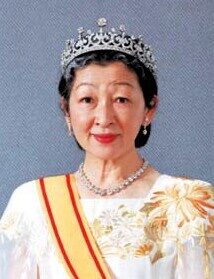
Empress Michiko
Empress Michiko is a wife of Emperor Akihito of Japan. Born October 20, 1934, in The University of Tokyo Hospital. Positions held include Empress of Japan (1989–2019) and Empress Emerita (2019–). Educated at Sacred Heart School and University of the Sacred Heart. Awards include Order of the White Eagle (Third Polish Republic), Grand Cross of the Order of the Sun of Peru and Grand Cross Special Class of the Order of Merit of the Federal Republic of Germany.
Facts
43 facts · 1 confirmed by two sources · 9 cited · 33 from one source
Where this comes from
Papalocal keeps its own record. It started from these sources; what each one said is kept here as it was copied, so a change on their side never changes this page by itself. Tap one to read its version.
What Wikidata says · copied November 16, 2026 · revision 2569009790
- Described as
- wife of Emperor Akihito of Japan
- Other names
- Kōgō Michiko, Shōda Michiko, Michiko Shōda, Michiko, Crown Princess of Japan, Crown Princess Michiko of Japan, Michiko, Empress Emerita, Empress Emerita Michiko, Jōkōgō Michiko, Mitchy, Kōtaishi Akihito Shinnō-hi Michiko Denka, Kōgō Heika, Jōkōgō Heika
- Born
- October 20, 1934
- Born in
- The University of Tokyo Hospital · 1 reference
- Name at birth
- 正田美智子 · 1 reference
- Citizen of
- Japan
- Occupation
- consort (1989–) · 1 reference; aristocrat (1959–); poet; children's writer
- Positions held
- Empress of Japan (1989–2019); Empress Emerita (2019–)
- Education
- Sacred Heart School (–1953); University of the Sacred Heart (1953–1957)
- Member of
- Emperor Akihito and Empress Michiko
- Instrument
- piano
- Awards
- Order of the White Eagle (Third Polish Republic) (2002) · 1 reference; Grand Cross of the Order of the Sun of Peru; Grand Cross Special Class of the Order of Merit of the Federal Republic of Germany; Grand Star of the Decoration for Services to the Republic of Austria (1999) · 1 reference; Knight of the Order of the Elephant (1998) · 1 reference; Grand Cross of the Order of Prince Henry (1998) · 2 references; Grand Cross of the Military Order of Saint James of the Sword (1993) · 2 references; Grand Cross of the Order of Isabella the Catholic (1972) · 1 reference; Knight Grand Cross in the Order of the Netherlands Lion (1991); Grand Cross of the Order of Vytautas the Great (2007) · 1 reference; Grand Cordon of the Order of Leopold; Order of Ojaswi Rajanya; Order of Gabriela Silang; Order of Charles III (1994); Order of the Queen of Sheba
- Spouse
- Akihito (1959–)
- Children
- Naruhito; Fumihito, Crown Prince of Japan; Sayako Kuroda
- Father
- Hidesaburō Shōda
- Mother
- Fumiko Shōda
- Siblings
- Osamu Shōda; Iwao Shōda
- Religion
- Shinto
- Lived in
- Tokyo; Tatebayashi; Karuizawa; Tōgū Palace (1959–1989); Tokyo Imperial Palace (1989–)
- Wikipedias with a page
- 50
Wikidata item Q87610 (wikidata.org/wiki/Q87610), public domain (CC0). Copied November 16, 2026.
What Wikipedia says · copied November 16, 2026 · revision 1385658981
Michiko (美智子; born Michiko Shōda [正田 美智子 Shōda Michiko], 20 October 1934) is a member of the Imperial House of Japan who has been the Empress Emerita of Japan since 1 May 2019. She was the Empress of Japan as the wife of Akihito, the 125th Emperor of Japan reigning from 7 January 1989 to 30 April 2019.
Michiko married Crown Prince Akihito and became Crown Princess of Japan in 1959. She was the first commoner to marry into the Japanese imperial family. She has three children with her husband: Naruhito, Fumihito, and Sayako. Her elder son, Naruhito, is the current emperor. As crown princess and later as empress consort, she has become the most visible and widely travelled imperial consort in Japanese history. Upon Akihito's abdication, Michiko received the new title of Jōkōgō (上皇后), or Empress Emerita.
- Born, in its opening lines
- October 20, 1934
From the Wikipedia article “Empress Michiko” (en.wikipedia.org/wiki/Empress_Michiko), by its contributors, under CC BY-SA 4.0 (creativecommons.org/licenses/by-sa/4.0/). Copied November 16, 2026; not changed.
Confirmed Two sources agree. Cited One source, and it names where it got it. One source One source, without a reference of its own. Sources disagree The sources disagree. We show the best-supported value and keep theirs below.
