
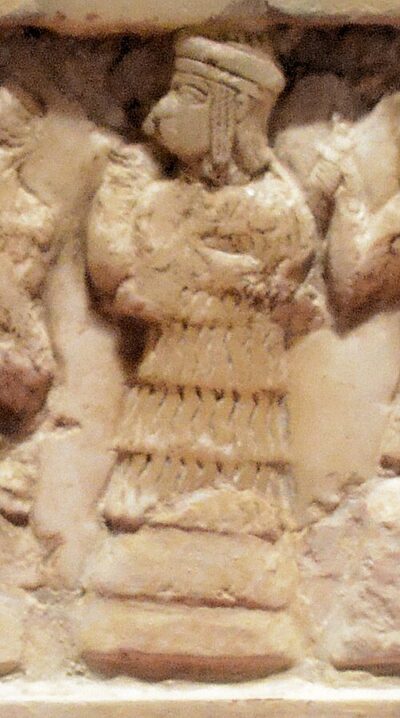
Enheduanna
Enheduanna was an Akkadian princess; Sumerian high priestess of Nanna at Ur; poet and philosopher. Born 23rd century BC, in Akkadian Empire. Died 23rd century BC. Positions held include high priest. Known for The Exaltation of Inanna.
Facts
19 facts · 0 confirmed by two sources · 2 cited · 17 from one source
Where this comes from
Papalocal keeps its own record. It started from these sources; what each one said is kept here as it was copied, so a change on their side never changes this page by itself. Tap one to read its version.
What Wikidata says · copied November 16, 2026 · revision 2557869526
- Described as
- Akkadian princess; Sumerian high priestess of Nanna at Ur; poet and philosopher
- Other names
- Enheduana, En-hedu-ana
- Born
- 23rd century BC
- Died
- 23rd century BC
- Born in
- Akkadian Empire
- Citizen of
- Akkadian Empire
- Occupation
- poet; writer · 1 reference; priest; philosopher
- Positions held
- high priest
- Member of
- Sumerian religion
- Known for
- The Exaltation of Inanna · 1 reference
- Field
- poetry
- Father
- Sargon of Akkad
- Mother
- Tashlultum
- Siblings
- Ilaba'is-takal; Rimush; Shu-Enlil; Manishtushu
- Lived in
- Ur
- Wikipedias with a page
- 70
Wikidata item Q232505 (wikidata.org/wiki/Q232505), public domain (CC0). Copied November 16, 2026.
What Wikipedia says · copied November 16, 2026 · revision 1385815349
Enheduanna (Sumerian: 𒂗𒃶𒌌𒀭𒈾 Enḫéduanna, also transliterated as Enheduana, En-he2-du7-an-na, or variants; fl. c. 2300 BCE) was the entu (high) priestess of the moon god Nanna (Sīn) in the Sumerian city-state of Ur in the reign of her father, Sargon of Akkad (r. c. 2334 – c. 2279 BCE). She was likely appointed by her father as the leader of the religious group at Ur to cement ties between the Akkadian religion of her father and the native Sumerian religion. Enheduanna has been celebrated as the earliest known named author in world history.
A number of works in Sumerian literature, such as the Exaltation of Inanna feature her as the first-person narrator, and other works, such as the Sumerian Temple Hymns may identify her as their author. However, there is considerable debate among modern Assyriologists based on linguistic and archaeological grounds as to whether or not she actually wrote or composed any of the rediscovered works that have been attributed to her. Additionally, the only manuscripts of the works attributed to her were written by scribes in the First Babylonian Empire six centuries after she lived, written in a more recent dialect of the Sumerian language than she would have spoken. These scribes may have attributed these works to her as part of the legendary narratives of the dynasty of Sargon of Akkad in later Babylonian traditions.
The cultural memory of Enheduanna and the works attributed to her were lost some time after the end of the First Babylonian Empire. Her existence was first rediscovered by modern archaeology in 1927, when Sir Leonard Woolley excavated the Giparu in the ancient city of Ur and found an alabaster disk with her name, association with Sargon of Akkad, and occupation inscribed on the reverse. References to her name were then later discovered in excavated works of Sumerian literature, which initiated investigation into her potential authorship of those works. Enheduanna's archaeological rediscovery has attracted a considerable amount of attention and scholarly debate in modern times related to her potential attribution as the first known named author. She has also received considerable attention in feminism, and the works attributed to her have also been studied as an early progenitor of classical rhetoric. English translations of her works have inspired a number of literary adaptations and representations.
From the Wikipedia article “Enheduanna” (en.wikipedia.org/wiki/Enheduanna), by its contributors, under CC BY-SA 4.0 (creativecommons.org/licenses/by-sa/4.0/). Copied November 16, 2026; not changed.
Confirmed Two sources agree. Cited One source, and it names where it got it. One source One source, without a reference of its own. Sources disagree The sources disagree. We show the best-supported value and keep theirs below.
