
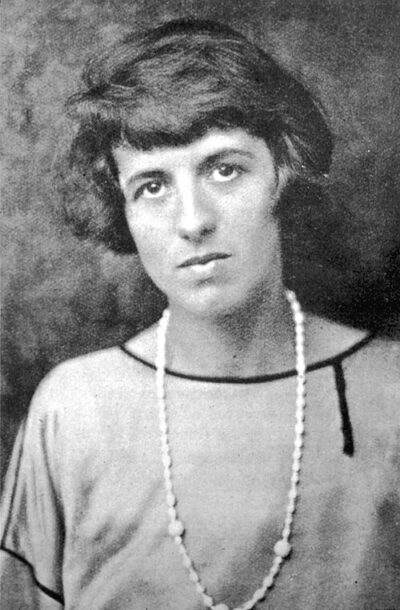
Enid Blyton
Enid Blyton was an English author. Born August 11, 1897, in East Dulwich. Died November 28, 1968, in Hampstead. Known for The Famous Five, The Secret Seven and Child Whispers. Educated at Holliwood High School.
Facts
37 facts · 2 confirmed by two sources · 12 cited · 23 from one source
Where this comes from
Papalocal keeps its own record. It started from these sources; what each one said is kept here as it was copied, so a change on their side never changes this page by itself. Tap one to read its version.
What Wikidata says · copied November 16, 2026 · revision 2557869532
- Described as
- English author (1897–1968)
- Other names
- Enid Mary Blyton, Mary Pollock, Enid (Mary) Blyton
- Born
- August 11, 1897 · 12 references
- Died
- November 28, 1968 · 12 references
- Born in
- East Dulwich · 2 references
- Died in
- Hampstead · 2 references
- Buried in
- Golders Green Crematorium · 1 reference
- Cause of death
- Alzheimer's disease
- Name at birth
- Enid Mary Blyton
- Citizen of
- United Kingdom · 1 reference
- Occupation
- writer · 1 reference; novelist; poet; school teacher; children's writer · 2 references; screenwriter; teacher · 2 references
- Education
- Holliwood High School · 1 reference
- Genre
- children's literature · 1 reference
- Known for
- The Famous Five; The Secret Seven; Child Whispers; The Enid Blyton Adventure Series; The Enchanted Wood; The Naughtiest Girl in the School; The Naughtiest Girl Again; The Adventurous Four; The Twins at St. Clare's; Five on a Treasure Island
- Field
- poetry · 1 reference; pedagogy · 1 reference; literary activity · 1 reference; scientific literature · 1 reference; children's and young adult literature · 1 reference
- Spouse
- Hugh Alexander Pollock (1924–1943); Kenneth Fraser Darrell Waters (1943–1967) · 1 reference
- Children
- Gillian Baverstock · 1 reference; Imogen Smallwood
- Website
- https://enidblytonsociety.co.uk
- Wikipedias with a page
- 90
Wikidata item Q192069 (wikidata.org/wiki/Q192069), public domain (CC0). Copied November 16, 2026.
What Wikipedia says · copied November 16, 2026 · revision 1384127707
Enid Mary Blyton (11 August 1897 – 28 November 1968) was an English children's writer. She remains one of the best-selling children's literature writers of all time. Blyton's books have been worldwide best-sellers since the 1930s, selling more than 600 million copies, and have been translated into ninety languages. As of June 2019, Blyton was the fourth-most translated author. She wrote on a wide range of topics, including education, natural history, fantasy, mystery, and biblical narratives. She is best remembered for her Noddy, The Famous Five, The Secret Seven, The Five Find-Outers, The Faraway Tree and Malory Towers books and wrote many others, including the St. Clare's and The Naughtiest Girl series.
Her first book, Child Whispers, a 24-page collection of poems, was published in 1922. Following the commercial success of her early novels, such as Adventures of the Wishing-Chair (1937) and The Enchanted Wood (1939), Blyton went on to build a literary empire, sometimes producing fifty books a year in addition to her prolific magazine and newspaper contributions. Her writing was unplanned and sprang largely from her unconscious mind; she typed her stories as events unfolded before her. The sheer volume of her work and the speed with which she produced it led to rumours that Blyton employed an army of ghost writers, a charge she vehemently denied.
Blyton's work became increasingly controversial among literary critics, teachers, and parents beginning in the 1950s due to the alleged unchallenging nature of her writing and her themes, particularly in the Noddy series. Some libraries and schools banned her works, and from the 1930s until the 1950s, the BBC refused to broadcast her stories because of their perceived lack of literary merit. Her books have been criticised as elitist, sexist, racist, xenophobic, and at odds with the more progressive environment that was emerging in post-World War II Britain, but updated versions of her books have continued to be popular since her death in 1968.
She felt she had a responsibility to provide her readers with a strong moral framework, so she encouraged them to support worthy causes. In particular, through the clubs she set up or supported, she encouraged and organised them to raise funds for animal and paediatric charities. The story of Blyton's life was dramatised in Enid, a BBC television film featuring Helena Bonham Carter in the title role. It was first broadcast in the U.K. on BBC Four in 2009.
- Born, in its opening lines
- August 11, 1897
- Died, in its opening lines
- November 28, 1968
From the Wikipedia article “Enid Blyton” (en.wikipedia.org/wiki/Enid_Blyton), by its contributors, under CC BY-SA 4.0 (creativecommons.org/licenses/by-sa/4.0/). Copied November 16, 2026; not changed.
Confirmed Two sources agree. Cited One source, and it names where it got it. One source One source, without a reference of its own. Sources disagree The sources disagree. We show the best-supported value and keep theirs below.
