
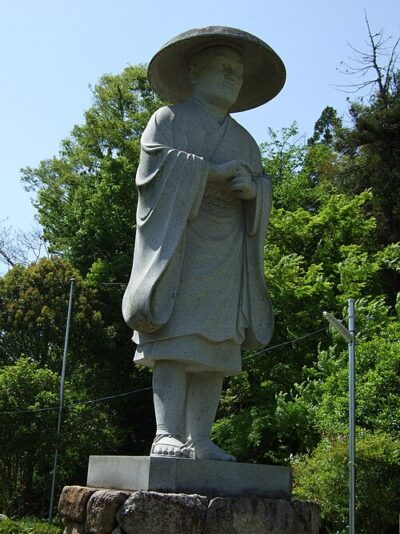
Ennin was a Japanese Buddhist monk. Born 793, in Tsuga district. Died February 24, 864. Positions held include Tendai-zasu (854–). Known for Ennin's Diary, Abridged Commentary on the Susiddhikara Sūtra and Kongocho daikyoo gyosho.
Facts
11 facts · 0 confirmed by two sources · 2 cited · 9 from one source
Where this comes from
Papalocal keeps its own record. It started from these sources; what each one said is kept here as it was copied, so a change on their side never changes this page by itself. Tap one to read its version.
What Wikidata says · copied November 18, 2026 · revision 2557098940
- Described as
- Japanese Buddhist monk (794–864)
- Other names
- Shi Yuanren, Huafang dashi, Cijiao dashi, Yuanren, Jikaku Daishi
- Born
- 793 · 1 reference
- Died
- February 24, 864 · 1 reference
- Born in
- Tsuga district
- Citizen of
- Japan
- Occupation
- Buddhist monk; writer
- Positions held
- Tendai-zasu (854–)
- Known for
- Ennin's Diary; Abridged Commentary on the Susiddhikara Sūtra; Kongocho daikyoo gyosho
- Religion
- Tendai
- Wikipedias with a page
- 22
Wikidata item Q732282 (wikidata.org/wiki/Q732282), public domain (CC0). Copied November 18, 2026.
What Wikipedia says · copied November 18, 2026 · revision 1372195439
Ennin (圓仁 or 円仁; 793 CE or 794 CE – 864 CE), better known in Japan by his posthumous name, Jikaku Daishi (慈覺大師), was a priest of the Tendai school of Buddhism in Japan, and its third Zasu (座主; "Head of the Tendai Order").
Ennin was instrumental in expanding the Tendai Order's influence, and bringing back crucial training and resources from China, particularly esoteric Buddhist training and Pure Land teachings. He is most well known for integrating esoteric practices (Taimitsu) with the teachings of the Lotus Sutra. His journey to Tang China (838–847) and his subsequent writings profoundly influenced Japanese Buddhism.
From the Wikipedia article “Ennin” (en.wikipedia.org/wiki/Ennin), by its contributors, under CC BY-SA 4.0 (creativecommons.org/licenses/by-sa/4.0/). Copied November 18, 2026; not changed.
Confirmed Two sources agree. Cited One source, and it names where it got it. One source One source, without a reference of its own. Sources disagree The sources disagree. We show the best-supported value and keep theirs below.
