
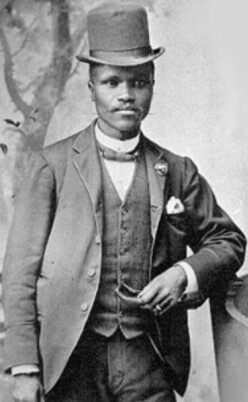
Enoch Mankayi Sontonga
Enoch Mankayi Sontonga was a South African composer. Born 1873, in Uitenhage. Died April 18, 1905, in Johannesburg. Known for Mungu ibariki Afrika, national anthem of Mzansi and Stand and Sing of Zambia, Proud and Free.
Facts
13 facts · 2 confirmed by two sources · 2 cited · 9 from one source
Where this comes from
Papalocal keeps its own record. It started from these sources; what each one said is kept here as it was copied, so a change on their side never changes this page by itself. Tap one to read its version.
What Wikidata says · copied November 16, 2026 · revision 2567226671
- Described as
- South African composer (1873-1905)
- Born
- 1873 · 2 references
- Died
- April 18, 1905
- Born in
- Uitenhage
- Died in
- Johannesburg · 1 reference
- Buried in
- Johannesburg
- Name at birth
- Enoch Mankayi Sontonga
- Citizen of
- South Africa
- Occupation
- poet; composer · 1 reference; songwriter · 1 reference
- Known for
- Mungu ibariki Afrika; national anthem of Mzansi; Stand and Sing of Zambia, Proud and Free
- Wikipedias with a page
- 29
Wikidata item Q983169 (wikidata.org/wiki/Q983169), public domain (CC0). Copied November 16, 2026.
What Wikipedia says · copied November 16, 2026 · revision 1355523013
Enoch Mankayi Sontonga (c. 1873 – 18 April 1905) was a South African composer, who is best known for writing the Xhosa hymn "Nkosi Sikelel' iAfrika" ("God Bless Africa"), which, in abbreviated version, has been sung as the first half of the national anthem of South Africa since 1994. Previously, it had been the official anthem of the African National Congress since 1925. This song was first adopted by Tanganyika as the national anthem, as a translated Swahili version, in 1961 following independence from Great Britain. In 1964, Zambia also adopted it as its national anthem, followed by Botswana and Zimbabwe (who translated into Shona, "Ishe Komborera Afrika") from 1980 until 1994. South Africa adopted it as its national anthem in 1994.
- Born, in its opening lines
- c. 1873
- Died, in its opening lines
- April 18, 1905
From the Wikipedia article “Enoch Sontonga” (en.wikipedia.org/wiki/Enoch_Sontonga), by its contributors, under CC BY-SA 4.0 (creativecommons.org/licenses/by-sa/4.0/). Copied November 16, 2026; not changed.
Confirmed Two sources agree. Cited One source, and it names where it got it. One source One source, without a reference of its own. Sources disagree The sources disagree. We show the best-supported value and keep theirs below.
