
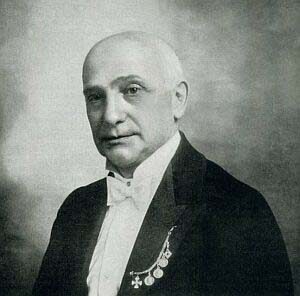
Enrico Cecchetti
Enrico Cecchetti was an Italian ballet dancer. Born June 21, 1850, in Rome. Died November 13, 1928, in Milan.
Facts
12 facts · 2 confirmed by two sources · 6 cited · 4 from one source
What’s different
- Died: we show November 13, 1928 (Confirmed). Wikidata also lists November 12, 1928
Where this comes from
Papalocal keeps its own record. It started from these sources; what each one said is kept here as it was copied, so a change on their side never changes this page by itself. Tap one to read its version.
What Wikidata says · copied November 18, 2026 · revision 2567351278
- Described as
- Italian ballet dancer (1850–1928)
- Born
- June 21, 1850 · 6 references
- Died
- November 12, 1928 · 2 references; November 13, 1928 · 2 references
- Born in
- Rome · 1 reference
- Died in
- Milan · 1 reference
- Citizen of
- Kingdom of Italy (1861–)
- Occupation
- ballet dancer; choreographer · 1 reference; dancer · 1 reference; ballet master · 1 reference; mime · 1 reference
- Worked for
- La Scala
- Spouse
- Giuseppina Cecchetti
- Wikipedias with a page
- 20
Wikidata item Q518945 (wikidata.org/wiki/Q518945), public domain (CC0). Copied November 18, 2026.
What Wikipedia says · copied November 18, 2026 · revision 1371501481
Enrico Cecchetti (Italian pronunciation: [enˈriːko tʃekˈketti]; 21 June 1850 – 13 November 1928) was an Italian ballet dancer, mime, and founder of the Cecchetti method. The son of two dancers from Civitanova Marche, he was born in the costuming room of the Teatro Tordinona in Rome. After an illustrious career as a dancer in Europe, he went to dance for the Imperial Ballet in St. Petersburg, Russia, where he further honed his skills. Cecchetti was praised for his agility and strength in his performances, as well as his technical abilities in dance. By 1888, he was widely accepted as the greatest ballet virtuoso in the world.
After an esteemed career in Russia, originating such roles as both the Bluebird and Carabosse in Petipa's masterpiece, The Sleeping Beauty, he turned to teaching. Some of his students included other notable dancers of the Imperial Ballet, such as: Anna Pavlova, Léonide Massine, and Vaslav Nijinsky. While in London in 1920, he provided instruction to the American ballerina Ruth Page and the British Ninette de Valois. He also restaged many ballets, including Petipa's definitive version of Coppélia in 1894, from which nearly all modern versions of the work are based. (This version was notated in the early 20th century, and is today part of the Sergeyev Collection). While teaching a class, Cecchetti collapsed and he died the following day, 13 November 1928.
Changes to the choreography of the male variations featured in the works of the Imperial Ballet's repertory. In 1890, Cecchetti performed in the ground-breaking production of The Sleeping Beauty, where his performance as the Bluebird caused a sensation in the audience at the Mariinsky Theatre. The choreography of the Bluebird has challenged male dancers even to the present day.
Cecchetti left the Imperial ballet in 1902 to accept the directorship of the Imperial Ballet School in Warsaw, Poland, then part of the Russian Empire. His farewell gala at the Mariinsky Theatre featured all of the leading ballerinas of the day, many of whom were his students. In order to have everyone pay him homage, the Paquita Grand pas classique was performed, with the inclusion of the favorite solos of all of the participating ballerinas. This led to the tradition of including a long suite of variations for several ballerinas.
In 1919 Cecchetti performed at the inaugural performance of the ballet, La Boutique fantasque, in London, appearing in the role of the shopkeeper.
- Born, in its opening lines
- June 21, 1850
- Died, in its opening lines
- November 13, 1928
From the Wikipedia article “Enrico Cecchetti” (en.wikipedia.org/wiki/Enrico_Cecchetti), by its contributors, under CC BY-SA 4.0 (creativecommons.org/licenses/by-sa/4.0/). Copied November 18, 2026; not changed.
Confirmed Two sources agree. Cited One source, and it names where it got it. One source One source, without a reference of its own. Sources disagree The sources disagree. We show the best-supported value and keep theirs below.
