
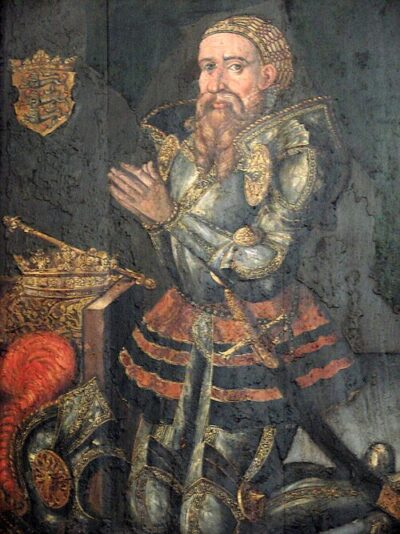
Eric II of Denmark was a Danish monarch. Born 1090. Died September 18, 1137, in Urnehoved Tingsted. Positions held include Monarch of Denmark (1134–1137).
Facts
14 facts · 2 confirmed by two sources · 1 cited · 11 from one source
Where this comes from
Papalocal keeps its own record. It started from these sources; what each one said is kept here as it was copied, so a change on their side never changes this page by itself. Tap one to read its version.
What Wikidata says · copied November 16, 2026 · revision 2557871029
- Described as
- Danish monarch
- Other names
- Eric Emune
- Born
- 1090
- Died
- September 18, 1137 · 2 references
- Died in
- Urnehoved Tingsted
- Buried in
- Ribe Cathedral
- Citizen of
- Kingdom of Denmark
- Occupation
- monarch
- Positions held
- Monarch of Denmark (1134–1137)
- Spouse
- Malmfred of Kyiv (1132–) · 1 reference
- Children
- Sweyn III of Denmark · 1 reference
- Father
- Eric I of Denmark
- Siblings
- Harald Kesja; Canute Lavard; Ragnhild Eriksdottir
- Religion
- Christianity
- Wikipedias with a page
- 38
Wikidata item Q365085 (wikidata.org/wiki/Q365085), public domain (CC0). Copied November 16, 2026.
What Wikipedia says · copied November 16, 2026 · revision 1360344956
Eric II the Memorable (Danish: Erik II Emune; c. 1090 – 18 September 1137) was king of Denmark between 1134 and 1137. He was an illegitimate son of Eric I of Denmark, who ruled the kingdom from 1095 to 1103. Eric the Memorable rebelled against his uncle Niels, King of Denmark, and was declared king in 1134. He punished his adversaries severely, and rewarded his supporters handsomely. He was killed by a subject in 1137 and was promptly succeeded as king by his nephew Eric III of Denmark.
- Born, in its opening lines
- c. 1090
- Died, in its opening lines
- September 18, 1137
From the Wikipedia article “Eric II of Denmark” (en.wikipedia.org/wiki/Eric_II_of_Denmark), by its contributors, under CC BY-SA 4.0 (creativecommons.org/licenses/by-sa/4.0/). Copied November 16, 2026; not changed.
Confirmed Two sources agree. Cited One source, and it names where it got it. One source One source, without a reference of its own. Sources disagree The sources disagree. We show the best-supported value and keep theirs below.
