
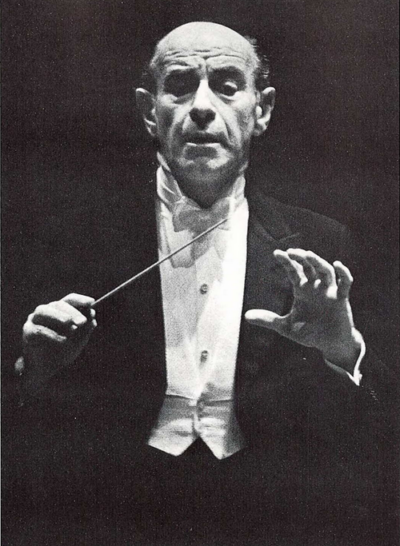
Erich Leinsdorf
Erich Leinsdorf was an American conductor. Born February 4, 1912, in Vienna. Died September 11, 1993, in Zurich. Educated at Mozarteum University Salzburg and University of Music and Performing Arts Vienna.
Facts
15 facts · 2 confirmed by two sources · 4 cited · 9 from one source
Where this comes from
Papalocal keeps its own record. It started from these sources; what each one said is kept here as it was copied, so a change on their side never changes this page by itself. Tap one to read its version.
What Wikidata says · copied November 16, 2026 · revision 2569174593
- Described as
- American conductor (1912-1993)
- Born
- February 4, 1912 · 7 references
- Died
- September 11, 1993 · 8 references
- Born in
- Vienna · 2 references
- Died in
- Zurich · 2 references
- Buried in
- Mount Pleasant Cemetery · 1 reference
- Citizen of
- United States; Austria
- Occupation
- conductor · 1 reference
- Education
- Mozarteum University Salzburg; University of Music and Performing Arts Vienna · 1 reference
- Member of
- American Academy of Arts and Sciences
- Genre
- classical music · 1 reference
- Instrument
- cello · 1 reference
- Record label
- RCA Red Seal; RCA Victor
- Wikipedias with a page
- 23
Wikidata item Q78602 (wikidata.org/wiki/Q78602), public domain (CC0). Copied November 16, 2026.
What Wikipedia says · copied November 16, 2026 · revision 1379682607
Erich Leinsdorf (born Erich Landauer; February 4, 1912 – September 11, 1993) was an Austrian-born American conductor. He performed and recorded with leading orchestras and opera companies throughout the United States and Europe, earning a reputation for exacting standards as well as an acerbic personality. He also published books and essays on musical matters.
- Born, in its opening lines
- February 4, 1912
- Died, in its opening lines
- September 11, 1993
From the Wikipedia article “Erich Leinsdorf” (en.wikipedia.org/wiki/Erich_Leinsdorf), by its contributors, under CC BY-SA 4.0 (creativecommons.org/licenses/by-sa/4.0/). Copied November 16, 2026; not changed.
Confirmed Two sources agree. Cited One source, and it names where it got it. One source One source, without a reference of its own. Sources disagree The sources disagree. We show the best-supported value and keep theirs below.
