
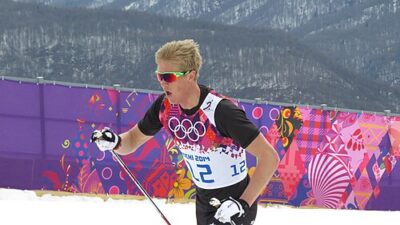
Erik Bjornsen is an American cross country skier. Born July 14, 1991, in Winthrop. Teams include APU Nordic Ski Center. Educated at Alaska Pacific University.
Facts
12 facts · 1 confirmed by two sources · 3 cited · 8 from one source
Where this comes from
Papalocal keeps its own record. It started from these sources; what each one said is kept here as it was copied, so a change on their side never changes this page by itself. Tap one to read its version.
What Wikidata says · copied November 19, 2026 · revision 2528133555
- Described as
- American cross country skier
- Born
- July 14, 1991
- Born in
- Winthrop
- Citizen of
- United States
- Occupation
- cross-country skier · 1 reference
- Education
- Alaska Pacific University
- Teams
- APU Nordic Ski Center
- Sport
- cross-country skiing
- Spouse
- Marine Dusser (2018–) · 1 reference
- Siblings
- Sadie Maubet Bjornsen
- Lived in
- Winthrop
- Height
- 1.85 m (6 ft 1 in) · 1 reference
- Website
- http://erikbjornsen.com/
- Wikipedias with a page
- 11
Wikidata item Q15730816 (wikidata.org/wiki/Q15730816), public domain (CC0). Copied November 19, 2026.
What Wikipedia says · copied November 19, 2026 · revision 1364623095
Erik Bjornsen (born July 14, 1991) is an American cross-country skier. He competed at the 2014 Winter Olympics in Sochi in the 30 kilometre skiathlon and sprint, and at the 2018 Winter Olympics in PyeongChang, South Korea, in men's 30 km skiathon and 15 km freestyle.
Bjornsen debuted in the World Cup in December 2012. His best result in a World Cup race was third place in a 15 km pursuit race in Lillehammer, Norway in December 2018.
He announced his retirement from cross-country skiing in April 2020.
His sister Sadie Maubet Bjornsen is a former cross-country skier on the United States Ski Team.
- Born, in its opening lines
- July 14, 1991
From the Wikipedia article “Erik Bjornsen” (en.wikipedia.org/wiki/Erik_Bjornsen), by its contributors, under CC BY-SA 4.0 (creativecommons.org/licenses/by-sa/4.0/). Copied November 19, 2026; not changed.
Confirmed Two sources agree. Cited One source, and it names where it got it. One source One source, without a reference of its own. Sources disagree The sources disagree. We show the best-supported value and keep theirs below.
