
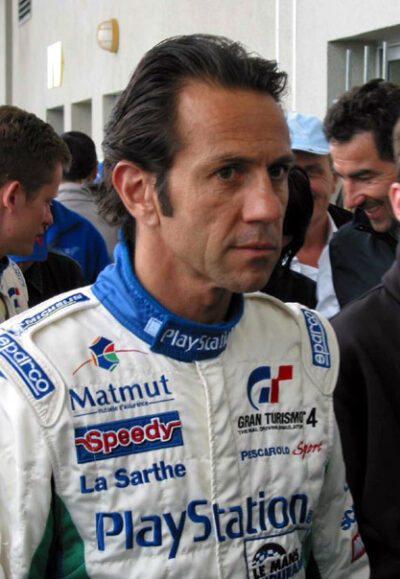
Érik Comas is a French racing driver. Born September 28, 1963, in Romans-sur-Isère.
Facts
6 facts · 1 confirmed by two sources · 0 cited · 5 from one source
Where this comes from
Papalocal keeps its own record. It started from these sources; what each one said is kept here as it was copied, so a change on their side never changes this page by itself. Tap one to read its version.
What Wikidata says · copied November 17, 2026 · revision 2522610274
- Described as
- French racing driver
- Other names
- Erik Comas
- Born
- September 28, 1963
- Born in
- Romans-sur-Isère
- Citizen of
- France
- Occupation
- racing automobile driver; Formula One driver
- Sport
- auto racing
- Wikipedias with a page
- 27
Wikidata item Q172966 (wikidata.org/wiki/Q172966), public domain (CC0). Copied November 17, 2026.
What Wikipedia says · copied November 17, 2026 · revision 1385779289
Érik Gilbert Comas (French: [e.ʁik kɔ.mas]; born 28 September 1963) is a French former racing driver, who competed in Formula One from 1991 to 1994. In Japanese motorsport, Comas won the All-Japan GT Championship in 1998 and 1999 with Nismo.
Comas won the French Formula Three Championship in 1988, before winning International Formula 3000 in 1990, after finishing runner-up to Jean Alesi on count-back in 1989. He participated in 63 Formula One Grands Prix between 1991 and 1994, scoring a total of seven championship points. His last point, in the 1994 German Grand Prix, was also the last one for the Larrousse team. After his Formula One career, he won the All-Japan GT Championship for Nismo in the top GT500 class in 1998 and 1999, and finished runner-up at the 24 Hours of Le Mans in 2005 with Pescarolo.
- Born, in its opening lines
- September 28, 1963
From the Wikipedia article “Érik Comas” (en.wikipedia.org/wiki/Érik_Comas), by its contributors, under CC BY-SA 4.0 (creativecommons.org/licenses/by-sa/4.0/). Copied November 17, 2026; not changed.
Confirmed Two sources agree. Cited One source, and it names where it got it. One source One source, without a reference of its own. Sources disagree The sources disagree. We show the best-supported value and keep theirs below.
