
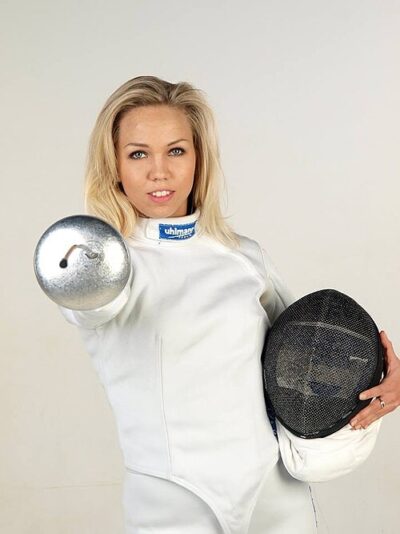
Erika Kirpu
Erika Kirpu is an Estonian fencer. Born June 22, 1992, in Moscow. Educated at Tallinn University of Technology and Tartu Annelinn Gymnasium. Awards include Estonian Athlete of the Year.
Facts
10 facts · 1 confirmed by two sources · 6 cited · 3 from one source
Where this comes from
Papalocal keeps its own record. It started from these sources; what each one said is kept here as it was copied, so a change on their side never changes this page by itself. Tap one to read its version.
What Wikidata says · copied November 17, 2026 · revision 2547523770
- Described as
- Estonian fencer (born 1992)
- Born
- June 22, 1992 · 1 reference
- Born in
- Moscow · 1 reference
- Citizen of
- Estonia
- Occupation
- fencer
- Education
- Tallinn University of Technology · 1 reference; Tartu Annelinn Gymnasium · 1 reference
- Sport
- fencing
- Awards
- Estonian Athlete of the Year (2014) · 1 reference
- Father
- Viktor Kirpu · 1 reference
- Height
- 1.74 m (5 ft 9 in) · 1 reference
- Wikipedias with a page
- 26
Wikidata item Q3731766 (wikidata.org/wiki/Q3731766), public domain (CC0). Copied November 17, 2026.
What Wikipedia says · copied November 17, 2026 · revision 1380329259
Erika Kirpu (born 22 June 1992) is an Estonian right-handed épée fencer.
Kirpu was born in Moscow to an Estonian father and a Russian mother of Ukrainian descent.
Kirpu is a two-time team European champion and 2017 team world champion.
A two-time Olympian, Kirpu is a 2021 team Olympic champion.
Kirpu competed in the 2016 Rio de Janeiro Olympic Games and the 2020 Tokyo Olympic Games.
She graduated from Tartu Annelinna Gümnaasium in 2010 and from the Faculty of Law of Tallinn University of Technology in 2014.
She lives in Milan, Italy with her partner and fellow épée fencer Enrico Garozzo.
- Born, in its opening lines
- June 22, 1992
From the Wikipedia article “Erika Kirpu” (en.wikipedia.org/wiki/Erika_Kirpu), by its contributors, under CC BY-SA 4.0 (creativecommons.org/licenses/by-sa/4.0/). Copied November 17, 2026; not changed.
Confirmed Two sources agree. Cited One source, and it names where it got it. One source One source, without a reference of its own. Sources disagree The sources disagree. We show the best-supported value and keep theirs below.
