
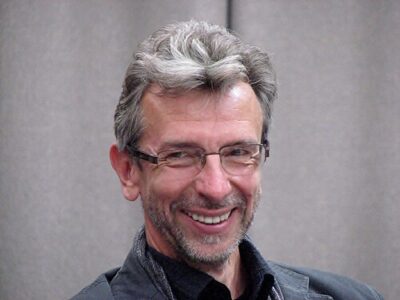
Erkki-Sven Tüür is an Estonian composer. Born October 16, 1959, in Kärdla. Known for Ardor, The Path and the Traces and Symphony nr. 4. Educated at Estonian Academy of Music and Theatre and Georg Ots Music School of Tallinn. Awards include Order of the White Star, 2nd Class, Citizen of the Year and Big Dipper prize.
Facts
24 facts · 1 confirmed by two sources · 5 cited · 18 from one source
Where this comes from
Papalocal keeps its own record. It started from these sources; what each one said is kept here as it was copied, so a change on their side never changes this page by itself. Tap one to read its version.
What Wikidata says · copied November 18, 2026 · revision 2540238644
- Described as
- Estonian composer (born 1959)
- Other names
- Erki Sven Tüür
- Born
- October 16, 1959 · 2 references
- Born in
- Kärdla
- Citizen of
- Estonia · 1 reference; Soviet Union
- Occupation
- composer · 3 references; percussionist; university teacher (1989–1992); music teacher · 1 reference
- Education
- Estonian Academy of Music and Theatre; Georg Ots Music School of Tallinn (–1980)
- Member of
- In Spe (–1984) · 1 reference
- Genre
- opera; symphony
- Instrument
- flute; percussion instrument
- Record label
- ECM Records
- Known for
- Ardor; The Path and the Traces; Symphony nr. 4
- Awards
- Order of the White Star, 2nd Class (2000) · 1 reference; Citizen of the Year (2009); Big Dipper prize (1996)
- Father
- Philipp-Teedy Tüür
- Website
- http://www.erkkisven.com
- Wikipedias with a page
- 20
Wikidata item Q462186 (wikidata.org/wiki/Q462186), public domain (CC0). Copied November 18, 2026.
What Wikipedia says · copied November 18, 2026 · revision 1375578339
Erkki-Sven Tüür (Estonian pronunciation: [tyːr]; born 16 October 1959) is an Estonian composer.
- Born, in its opening lines
- October 16, 1959
From the Wikipedia article “Erkki-Sven Tüür” (en.wikipedia.org/wiki/Erkki-Sven_Tüür), by its contributors, under CC BY-SA 4.0 (creativecommons.org/licenses/by-sa/4.0/). Copied November 18, 2026; not changed.
Confirmed Two sources agree. Cited One source, and it names where it got it. One source One source, without a reference of its own. Sources disagree The sources disagree. We show the best-supported value and keep theirs below.
