
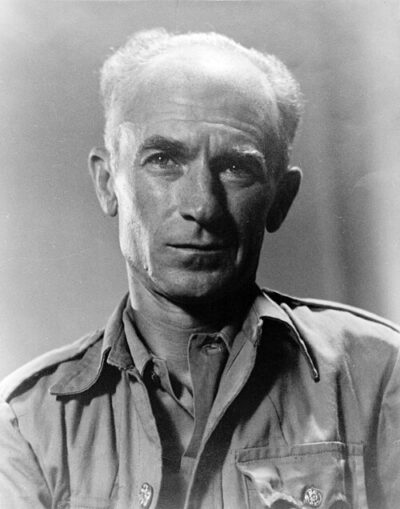
Ernie Pyle
Ernie Pyle was an American war correspondent and writer. Born August 3, 1900, in Dana. Died April 18, 1945, in Iejima. Educated at Indiana University. Awards include Purple Heart, Pulitzer Prize for Correspondence and Raymond Clapper Memorial Award.
Facts
14 facts · 2 confirmed by two sources · 6 cited · 6 from one source
Where this comes from
Papalocal keeps its own record. It started from these sources; what each one said is kept here as it was copied, so a change on their side never changes this page by itself. Tap one to read its version.
What Wikidata says · copied November 15, 2026 · revision 2569097465
- Described as
- American war correspondent and writer (1900–1945)
- Other names
- Ernest Taylor "Ernie" Pyle, Ernest Taylor Pyle, Ernie Taylor Pyle
- Born
- August 3, 1900 · 4 references
- Died
- April 18, 1945 · 4 references
- Born in
- Dana
- Died in
- Iejima
- Buried in
- National Memorial Cemetery of the Pacific · 1 reference
- Citizen of
- United States
- Occupation
- journalist · 1 reference; writer · 2 references; war correspondent · 1 reference
- Education
- Indiana University
- Awards
- Purple Heart; Pulitzer Prize for Correspondence (1944) · 1 reference; Raymond Clapper Memorial Award (1944) · 1 reference
- Field
- journalist
- Wikipedias with a page
- 26
Wikidata item Q38415 (wikidata.org/wiki/Q38415), public domain (CC0). Copied November 15, 2026.
What Wikipedia says · copied November 15, 2026 · revision 1378398857
Ernest Taylor Pyle (August 3, 1900 – April 18, 1945) was an American journalist and war correspondent who is best known for his stories about ordinary American soldiers during World War II. Pyle is also notable for the columns he wrote as a roving human-interest reporter from 1935 through 1941 for the Scripps-Howard newspaper syndicate that earned him wide acclaim for his simple accounts of ordinary people across North America. When the United States entered World War II, he lent the same distinctive, folksy style of his human-interest stories to his wartime reports from the European theater (1942–44) and Pacific theater (1945). Pyle won the Pulitzer Prize in 1944 for his newspaper accounts of "dogface" infantry soldiers from a first-person perspective. He was killed by enemy fire on Iejima (then known as Ie Shima) during the Battle of Okinawa.
At the time of his death in 1945, Pyle was among the best-known American war correspondents. His syndicated column was published in 400 daily and 300 weekly newspapers nationwide. President Harry Truman said of Pyle, "No man in this war has so well told the story of the American fighting man as American fighting men wanted it told. He deserves the gratitude of all his countrymen."
- Born, in its opening lines
- August 3, 1900
- Died, in its opening lines
- April 18, 1945
From the Wikipedia article “Ernie Pyle” (en.wikipedia.org/wiki/Ernie_Pyle), by its contributors, under CC BY-SA 4.0 (creativecommons.org/licenses/by-sa/4.0/). Copied November 15, 2026; not changed.
Confirmed Two sources agree. Cited One source, and it names where it got it. One source One source, without a reference of its own. Sources disagree The sources disagree. We show the best-supported value and keep theirs below.
