
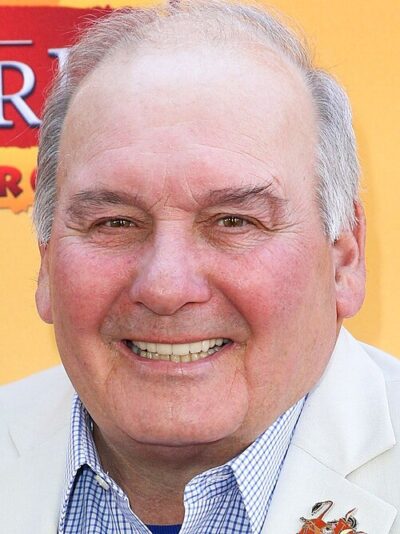
Ernie Sabella
Ernie Sabella is an American actor. Born September 19, 1949, in Westchester County. Known for The Lion King, The Lion King II: Simba's Pride and The Lion King 1½. Educated at University of Miami and Westlake High School.
Facts
15 facts · 1 confirmed by two sources · 2 cited · 12 from one source
Where this comes from
Papalocal keeps its own record. It started from these sources; what each one said is kept here as it was copied, so a change on their side never changes this page by itself. Tap one to read its version.
What Wikidata says · copied November 15, 2026 · revision 2563788340
- Described as
- American actor
- Other names
- Ernest Sabella
- Born
- September 19, 1949 · 2 references
- Born in
- Westchester County
- Citizen of
- United States
- Occupation
- voice actor; stage actor; television actor; film actor; singer · 1 reference; musician · 1 reference
- Education
- University of Miami; Westlake High School
- Known for
- The Lion King; The Lion King II: Simba's Pride; The Lion King 1½; Mickey's Magical Christmas: Snowed in at the House of Mouse
- Wikipedias with a page
- 24
Wikidata item Q451833 (wikidata.org/wiki/Q451833), public domain (CC0). Copied November 15, 2026.
What Wikipedia says · copied November 15, 2026 · revision 1379099335
Ernest Sabella (born September 19, 1949) is an American actor. He is best known for his role as Pumbaa from The Lion King franchise, voicing the character in all media except the 2019 and 2024 films. Sabella's TV roles include Mr. Donald "Twinkie" Twinkacetti in Perfect Strangers (1986–1987), George Shipman in A Fine Romance (1989), and Leon Carosi in Saved by the Bell (1991). His work in Broadway theatre includes starring roles in Guys and Dolls, Chicago, Curtains, and Man of La Mancha.
- Born, in its opening lines
- September 19, 1949
From the Wikipedia article “Ernie Sabella” (en.wikipedia.org/wiki/Ernie_Sabella), by its contributors, under CC BY-SA 4.0 (creativecommons.org/licenses/by-sa/4.0/). Copied November 15, 2026; not changed.
Confirmed Two sources agree. Cited One source, and it names where it got it. One source One source, without a reference of its own. Sources disagree The sources disagree. We show the best-supported value and keep theirs below.
