
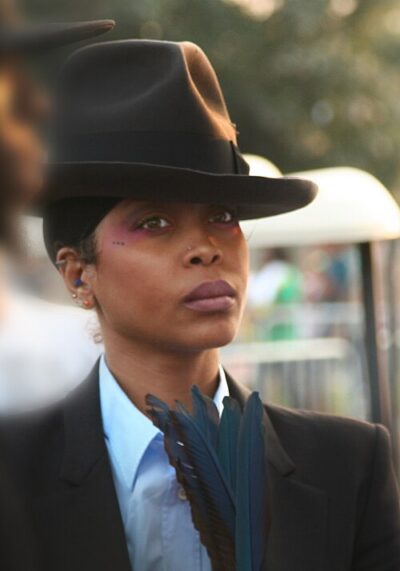
Erykah Badu
Erykah Badu is an American singer-songwriter. Born February 26, 1971, in Dallas. Known for Badu Pussy. Educated at Grambling State University and Booker T. Washington High School for the Performing and Visual Arts.
Facts
24 facts · 1 confirmed by two sources · 4 cited · 19 from one source
Where this comes from
Papalocal keeps its own record. It started from these sources; what each one said is kept here as it was copied, so a change on their side never changes this page by itself. Tap one to read its version.
What Wikidata says · copied November 13, 2026 · revision 2563385290
- Described as
- American singer-songwriter (born 1971)
- Other names
- Erica Wright, Erica Abi Wright
- Born
- February 26, 1971 · 5 references
- Born in
- Dallas · 1 reference
- Name at birth
- Erica Abi Wright
- Citizen of
- United States
- Occupation
- singer · 1 reference; singer-songwriter; poet; composer; jazz musician; actor; record producer; writer
- Education
- Grambling State University; Booker T. Washington High School for the Performing and Visual Arts · 1 reference
- Genre
- soul; neo soul · 1 reference
- Instrument
- voice · 1 reference
- Known for
- Badu Pussy
- Field
- poetry; music composing
- Children
- Seven Sirius Benjamin; Puma Sabti Curry
- Lived in
- Dallas
- Website
- http://erykah-badu.com · 1 reference
- Wikipedias with a page
- 51
Wikidata item Q223875 (wikidata.org/wiki/Q223875), public domain (CC0). Copied November 13, 2026.
What Wikipedia says · copied November 13, 2026 · revision 1385164185
Erica Abi Wright (born February 26, 1971), known professionally as Erykah Badu, is an American singer, songwriter, record producer, and actress. Influenced by R&B, soul, and hip-hop, Badu rose to prominence in the late 1990s when her debut studio album Baduizm (1997), placed her at the forefront of the neo soul movement, earning her the nickname "Queen of Neo Soul" by music critics.
Badu's career began after opening a show for D'Angelo in 1994 in Fort Worth, which led to record label executive Kedar Massenburg signing her to Kedar Entertainment. Badu's first album, Baduizm, was released in February 11, 1997. It spawned four singles: "On & On", "Appletree", "Next Lifetime" and "Otherside of the Game". The album was certified triple platinum by the Recording Industry Association of America (RIAA). Badu's first live album, Live, was released in November 1997, and contained her signature song "Tyrone" and was subsequently certified double platinum by the RIAA.
Badu's second studio album, Mama's Gun, was released in 2000. It spawned three singles: "Bag Lady", which became her first top 10 single on the Billboard Hot 100 peaking at number 6, "Didn't Cha Know?" and "Cleva". The album was certified platinum by the RIAA. Badu's third album, Worldwide Underground, was released in 2003. It generated three singles: "Love of My Life (An Ode to Hip-Hop)", "Danger" and "Back in the Day (Puff)", with the first becoming her second song to reach the top 10 of the Billboard Hot 100, peaking at number 9. The album was certified gold by the RIAA. Badu's fourth album, New Amerykah Part One, was released in 2008. It spawned two singles: "Honey" and "Soldier". New Amerykah Part Two was released in 2010 and fared well both critically and commercially. It contained the album's lead single "Window Seat", whose music video sparked controversy.
Badu's voice has been compared to jazz singer Billie Holiday. Early in her career, Badu was recognizable for her style, which often included wearing very large and colorful headwraps. She was a core member of the Soulquarians. As an actress, she has played a number of supporting roles in movies including Blues Brothers 2000, The Cider House Rules and House of D. She also has appeared in the documentaries Before the Music Dies and The Black Power Mixtape 1967-1975.
- Born, in its opening lines
- February 26, 1971
From the Wikipedia article “Erykah Badu” (en.wikipedia.org/wiki/Erykah_Badu), by its contributors, under CC BY-SA 4.0 (creativecommons.org/licenses/by-sa/4.0/). Copied November 13, 2026; not changed.
Confirmed Two sources agree. Cited One source, and it names where it got it. One source One source, without a reference of its own. Sources disagree The sources disagree. We show the best-supported value and keep theirs below.
