
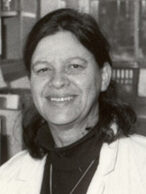
Esther Lederberg
Esther Lederberg was an American microbiologist and pioneer of bacterial genetics. Born December 18, 1922, in The Bronx. Died November 11, 2006, in Stanford. Educated at University of Wisconsin–Madison and Stanford University.
Facts
21 facts · 2 confirmed by two sources · 5 cited · 14 from one source
Where this comes from
Papalocal keeps its own record. It started from these sources; what each one said is kept here as it was copied, so a change on their side never changes this page by itself. Tap one to read its version.
What Wikidata says · copied November 15, 2026 · revision 2567195787
- Described as
- American microbiologist and pioneer of bacterial genetics (1922–2006)
- Other names
- Esther Miriam Zimmer, Esther Miriam Lederberg, E. M. Zimmer, E M Zimmer, E.M. Zimmer, E. Zimmer, E Zimmer, Zimmer, Zimmer E, Zimmer E., Zimmer E. M., Zimmer EM
- Born
- December 18, 1922
- Died
- November 11, 2006 · 1 reference
- Born in
- The Bronx · 1 reference
- Died in
- Stanford · 1 reference
- Cause of death
- heart failure
- Name at birth
- Esther Miriam Zimmer · 1 reference
- Citizen of
- United States
- Occupation
- geneticist · 1 reference; microbiologist · 1 reference
- Worked for
- New York Botanical Garden; Carnegie Science; University of Wisconsin–Madison
- Education
- University of Wisconsin–Madison; Stanford University; Hunter College (–1942)
- Field
- microbiology; Peperomia blanda; Escherichia coli; Enterobacteria phage lambda; genetics
- Spouse
- Joshua Lederberg · 1 reference
- Wikipedias with a page
- 29
Wikidata item Q586884 (wikidata.org/wiki/Q586884), public domain (CC0). Copied November 15, 2026.
What Wikipedia says · copied November 15, 2026 · revision 1382542397
Esther Miriam Zimmer Lederberg (December 18, 1922 – November 11, 2006) was an American microbiologist and a pioneer of bacterial genetics. She discovered the bacterial virus lambda phage and the bacterial fertility factor F, devised the first implementation of replica plating, and furthered the understanding of the transfer of genes between bacteria by specialized transduction.
Lederberg also founded and directed the now-defunct Plasmid Reference Center at Stanford University, where she maintained, named, and distributed plasmids of many types, including those coding for antibiotic resistance, heavy metal resistance, virulence, conjugation, colicins, transposons, and other unknown factors.
As a woman in a male-dominated field and the wife of Nobel laureate Joshua Lederberg, Esther Lederberg struggled for professional recognition. Despite her foundational discoveries in the field of microbiology, she was never offered a tenured position at a university. Textbooks often ignore her work and attribute her accomplishments to her husband.
- Born, in its opening lines
- December 18, 1922
- Died, in its opening lines
- November 11, 2006
From the Wikipedia article “Esther Lederberg” (en.wikipedia.org/wiki/Esther_Lederberg), by its contributors, under CC BY-SA 4.0 (creativecommons.org/licenses/by-sa/4.0/). Copied November 15, 2026; not changed.
Confirmed Two sources agree. Cited One source, and it names where it got it. One source One source, without a reference of its own. Sources disagree The sources disagree. We show the best-supported value and keep theirs below.
