
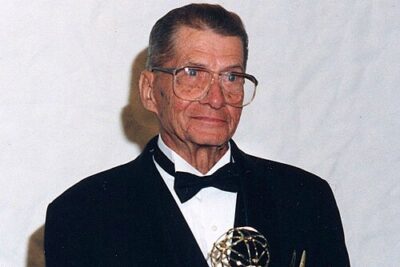
Eugene Polley
Eugene Polley was an Engineer, inventor of remote control, 1915-2012. Born November 29, 1915, in Chicago. Died May 20, 2012, in Downers Grove. Known for Zenith Flash-matic. Educated at City Colleges of Chicago and Armour Institute. Awards include Technology and Engineering Emmy Award and IEEE Masaru Ibuka Consumer Electronics Award.
Facts
14 facts · 2 confirmed by two sources · 1 cited · 11 from one source
Where this comes from
Papalocal keeps its own record. It started from these sources; what each one said is kept here as it was copied, so a change on their side never changes this page by itself. Tap one to read its version.
What Wikidata says · copied November 16, 2026 · revision 2508606515
- Described as
- Engineer, inventor of remote control, 1915-2012
- Other names
- Eugene Joseph Polley, Eugene Anthony Palcnynski
- Born
- November 29, 1915 · 2 references
- Died
- May 20, 2012 · 2 references
- Born in
- Chicago · 1 reference
- Died in
- Downers Grove
- Buried in
- Wheaton · 1 reference
- Citizen of
- United States
- Occupation
- inventor
- Worked for
- Zenith Electronics (1935–1982)
- Education
- City Colleges of Chicago; Armour Institute
- Known for
- Zenith Flash-matic (1955)
- Awards
- Technology and Engineering Emmy Award; IEEE Masaru Ibuka Consumer Electronics Award (2009) · 1 reference
- Field
- electrical engineering
- Wikipedias with a page
- 23
Wikidata item Q376196 (wikidata.org/wiki/Q376196), public domain (CC0). Copied November 16, 2026.
What Wikipedia says · copied November 16, 2026 · revision 1372458574
Eugene Joseph Polley (November 29, 1915 – May 20, 2012) was an electrical engineer and engineering manager for Zenith Electronics who invented the first wireless remote control for television.
- Born, in its opening lines
- November 29, 1915
- Died, in its opening lines
- May 20, 2012
From the Wikipedia article “Eugene Polley” (en.wikipedia.org/wiki/Eugene_Polley), by its contributors, under CC BY-SA 4.0 (creativecommons.org/licenses/by-sa/4.0/). Copied November 16, 2026; not changed.
Confirmed Two sources agree. Cited One source, and it names where it got it. One source One source, without a reference of its own. Sources disagree The sources disagree. We show the best-supported value and keep theirs below.
