
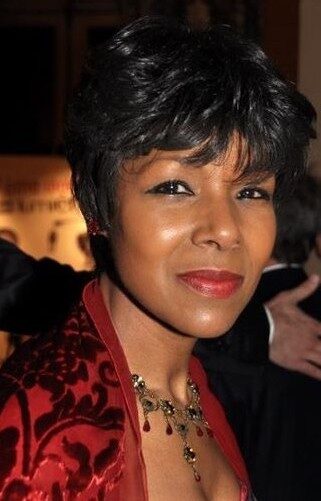
Euzhan Palcy
Euzhan Palcy is a French film director, screenwriter and film producer. Born January 13, 1958, in Gros-Morne. Known for Sugar Cane Alley, A Dry White Season and Ruby Bridges. Educated at Faculty of Arts of Paris and École nationale supérieure Louis-Lumière. Awards include Guggenheim Fellowship, Officer of the National Order of Merit and Candace Award.
Facts
26 facts · 1 confirmed by two sources · 8 cited · 17 from one source
Where this comes from
Papalocal keeps its own record. It started from these sources; what each one said is kept here as it was copied, so a change on their side never changes this page by itself. Tap one to read its version.
What Wikidata says · copied November 18, 2026 · revision 2546585748
- Described as
- French film director, screenwriter and film producer (born 1958)
- Born
- January 13, 1958 · 2 references
- Born in
- Gros-Morne
- Citizen of
- France · 3 references
- Occupation
- film director · 2 references; screenwriter; film producer · 1 reference; director · 1 reference
- Education
- Faculty of Arts of Paris; École nationale supérieure Louis-Lumière
- Member of
- Comité national pour la mémoire et l'histoire de l'esclavage (2013–)
- Known for
- Sugar Cane Alley · 1 reference; A Dry White Season · 1 reference; Ruby Bridges
- Awards
- Guggenheim Fellowship (1994) · 1 reference; Officer of the National Order of Merit; Candace Award (1990); Silver Lion (1983); César Award (1984); Women in Film Honors (2018); Grand Jury Prize of the Venice Film Festival (1983); César Award for Best First Film (1984); Officer of the Legion of Honour; Academy Honorary Award (2022) · 2 references; Afro-Caribbean Arts Trophies (2010)
- Lived in
- Paris
- Website
- https://www.euzhanpalcy.net/
- Wikipedias with a page
- 20
Wikidata item Q440423 (wikidata.org/wiki/Q440423), public domain (CC0). Copied November 18, 2026.
What Wikipedia says · copied November 18, 2026 · revision 1364645506
Euzhan Palcy ([ø.zan pal.si]; born 13 January 1958) is a Martinican film director, screenwriter, and producer. Her films are known to explore themes of race, gender, and politics, with an emphasis on the perpetuated effects of colonialism. Palcy's first feature film Sugar Cane Alley (La Rue Cases-Nègres, 1983) received numerous awards, including the César Award for Best First Feature Film. With A Dry White Season (1989), she became the first black female director to have a film produced by a major Hollywood studio, MGM.
Palcy also directed the independent film Siméon (1992). She has since moved towards directing documentaries and television projects such as Aimé Césaire: A Voice for History (1994). She then directed the television films Ruby Bridges (1998) and The Killing Yard (2001), as well as the documentary The Journey of the Dissidents (2005) and the miniseries The Brides of Bourbon Island (2007).
Throughout her career, Palcy has explored various genres, often breaking ground being the first female black director to do so. She is the first black director to win a César Award and the Venice Film Festival's Silver Lion, both for Sugar Cane Alley (1983). In 2022, she was given the Academy Honorary Award for her contributions to cinema.
- Born, in its opening lines
- January 13, 1958
From the Wikipedia article “Euzhan Palcy” (en.wikipedia.org/wiki/Euzhan_Palcy), by its contributors, under CC BY-SA 4.0 (creativecommons.org/licenses/by-sa/4.0/). Copied November 18, 2026; not changed.
Confirmed Two sources agree. Cited One source, and it names where it got it. One source One source, without a reference of its own. Sources disagree The sources disagree. We show the best-supported value and keep theirs below.
