
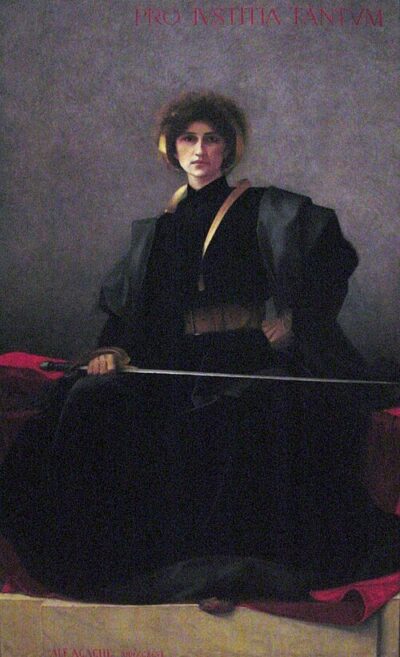
Evelyn Beatrice Hall
Evelyn Beatrice Hall was an English writer. Born September 28, 1868, in Shooter's Hill. Died April 13, 1956, in Wadhurst. Known for The Friends of Voltaire.
Facts
8 facts · 2 confirmed by two sources · 1 cited · 5 from one source
Where this comes from
Papalocal keeps its own record. It started from these sources; what each one said is kept here as it was copied, so a change on their side never changes this page by itself. Tap one to read its version.
What Wikidata says · copied November 16, 2026 · revision 2566984581
- Described as
- English writer
- Other names
- S. G. Tallentyre, Stephen G. Tallentyre, Evelyn Hall
- Born
- September 28, 1868 · 1 reference
- Died
- April 13, 1956 · 1 reference
- Born in
- Shooter's Hill
- Died in
- Wadhurst
- Citizen of
- United Kingdom
- Occupation
- writer · 1 reference; biographer
- Known for
- The Friends of Voltaire
- Wikipedias with a page
- 39
Wikidata item Q263067 (wikidata.org/wiki/Q263067), public domain (CC0). Copied November 16, 2026.
What Wikipedia says · copied November 16, 2026 · revision 1377939798
Evelyn Beatrice Hall (28 September 1868 – 13 April 1956), who wrote under the pseudonym S[tephen] G. Tallentyre, was an English writer best known for her biography of Voltaire entitled The Life of Voltaire, first published in 1903. She also wrote The Friends of Voltaire, which she completed in 1906.
In The Friends of Voltaire, Hall wrote: "I disapprove of what you say, but I will defend to the death your right to say it" as an illustration of Voltaire's beliefs. This quotation – which is sometimes misattributed to Voltaire himself – is often cited to describe the principle of freedom of speech.
- Born, in its opening lines
- September 28, 1868
- Died, in its opening lines
- April 13, 1956
From the Wikipedia article “Evelyn Beatrice Hall” (en.wikipedia.org/wiki/Evelyn_Beatrice_Hall), by its contributors, under CC BY-SA 4.0 (creativecommons.org/licenses/by-sa/4.0/). Copied November 16, 2026; not changed.
Confirmed Two sources agree. Cited One source, and it names where it got it. One source One source, without a reference of its own. Sources disagree The sources disagree. We show the best-supported value and keep theirs below.
