
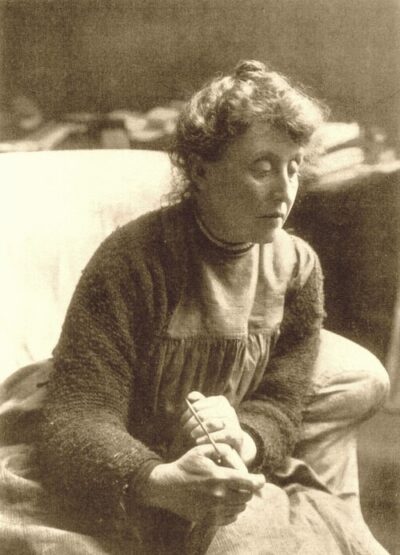
Evelyn De Morgan
Evelyn De Morgan was a Pre-Raphaelite artist (1993-. Born August 30, 1855, in London. Died May 2, 1919, in London. Known for The Love Potion, Aurora Triumphans and Helen of Troy. Educated at Slade School of Fine Art.
Facts
16 facts · 2 confirmed by two sources · 2 cited · 12 from one source
Where this comes from
Papalocal keeps its own record. It started from these sources; what each one said is kept here as it was copied, so a change on their side never changes this page by itself. Tap one to read its version.
What Wikidata says · copied November 16, 2026 · revision 2548237121
- Described as
- Pre-Raphaelite artist (1993- (1855–1919)
- Other names
- Evelyn Pickering De Morgan, Mary Evelyn De Morgan, Mary Evelyn de Morgan, Mrs. Evelyn De Morgan, Evelyn de Pickering, Evelyn, Miss Pickering, Evelyn Pickering, Evelyn de Morgan, Mrs. De Morgan, (Mary) Evelyn De Morgan (née Pickering)
- Born
- August 30, 1855 · 6 references
- Died
- May 2, 1919 · 7 references
- Born in
- London
- Died in
- London
- Buried in
- Brookwood Cemetery
- Citizen of
- United Kingdom of Great Britain and Ireland
- Occupation
- painter · 1 reference
- Education
- Slade School of Fine Art
- Known for
- The Love Potion; Aurora Triumphans; Helen of Troy
- Spouse
- William De Morgan · 1 reference
- Father
- Percival Pickering
- Mother
- Anna Maria Wilhelmina Spencer-Stanhope
- Siblings
- A. M. W. Stirling; Percival Spencer Umfreville Pickering
- Wikipedias with a page
- 33
Wikidata item Q235903 (wikidata.org/wiki/Q235903), public domain (CC0). Copied November 16, 2026.
What Wikipedia says · copied November 16, 2026 · revision 1367127373
Evelyn De Morgan (30 August 1855 – 2 May 1919) was an English painter associated early in her career with the later phase of the Pre-Raphaelite Movement, and working in a range of styles including Aestheticism and Symbolism. Her paintings are figural, foregrounding the female body through the use of spiritual, mythological, and allegorical themes. They rely on a range of metaphors (such as light and darkness, transformation, and bondage) to express what several scholars have identified as spiritualist and feminist content. Her later works also dealt with the themes of war from a pacifist perspective, engaging with conflicts such as the Second Boer War and World War I.
- Born, in its opening lines
- August 30, 1855
- Died, in its opening lines
- May 2, 1919
From the Wikipedia article “Evelyn De Morgan” (en.wikipedia.org/wiki/Evelyn_De_Morgan), by its contributors, under CC BY-SA 4.0 (creativecommons.org/licenses/by-sa/4.0/). Copied November 16, 2026; not changed.
Confirmed Two sources agree. Cited One source, and it names where it got it. One source One source, without a reference of its own. Sources disagree The sources disagree. We show the best-supported value and keep theirs below.
