
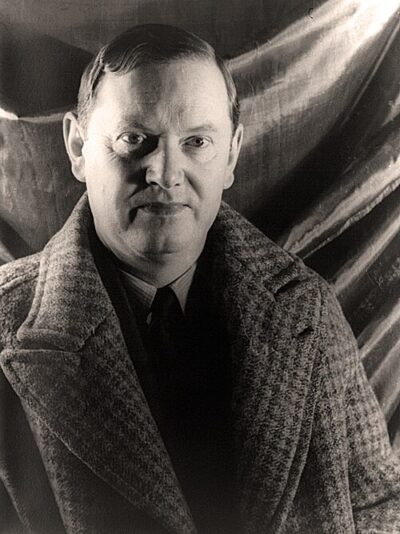
Evelyn Waugh
Evelyn Waugh was a British writer and journalist. Born October 28, 1903, in London. Died April 10, 1966, in Taunton. Known for A Handful of Dust and Brideshead Revisited. Educated at Hertford College and Lancing College. Awards include James Tait Black Memorial Prize and Hawthornden Prize.
Facts
51 facts · 2 confirmed by two sources · 25 cited · 22 from one source · 2 where the sources disagree
What’s different
- Born in: we show London (Sources disagree). Wikidata also lists West Hampstead
- Died in: we show Taunton (Sources disagree). Wikidata also lists Combe Florey
Where this comes from
Papalocal keeps its own record. It started from these sources; what each one said is kept here as it was copied, so a change on their side never changes this page by itself. Tap one to read its version.
What Wikidata says · copied November 16, 2026 · revision 2569138412
- Described as
- British writer and journalist (1903–1966)
- Other names
- Evelyn Arthur St John Waugh, Arthur Evelyn St. John Waugh
- Born
- October 28, 1903 · 13 references
- Died
- April 10, 1966 · 13 references
- Born in
- West Hampstead; London · 2 references
- Died in
- Combe Florey · 2 references; Taunton · 3 references
- Buried in
- Church of St Peter & St Paul
- Cause of death
- myocardial infarction
- Citizen of
- United Kingdom · 2 references
- Occupation
- war correspondent; novelist · 1 reference; writer · 4 references; autobiographer · 1 reference; screenwriter · 3 references; science fiction writer; diarist · 1 reference; prose writer · 1 reference
- Education
- Hertford College · 1 reference; Lancing College; Sherborne School; Heath Mount School; Heatherley School of Fine Art
- Genre
- satire; travel book; biography; autobiography · 1 reference
- Known for
- A Handful of Dust; Brideshead Revisited
- Awards
- James Tait Black Memorial Prize (1952); Hawthornden Prize (1936)
- Field
- creative and professional writing · 1 reference; journalism · 1 reference; war journalism · 1 reference; autobiography · 1 reference; travel book · 1 reference; satirical literature · 1 reference
- Spouse
- Laura Herbert (1937–) · 3 references; Evelyn Gardner (1928–) · 2 references
- Children
- Auberon Waugh · 2 references; Maria Teresa Waugh · 3 references; Mary Waugh · 3 references; Margaret Evelyn Waugh · 2 references; Harriet Mary Waugh · 2 references; James Waugh · 2 references; Septimus Waugh · 3 references
- Father
- Arthur Waugh · 2 references
- Mother
- Catherine Charlotte Raban · 2 references
- Siblings
- Alec Waugh · 2 references
- Religion
- Catholicism (1930–) · 1 reference
- Military branch
- British Army; Royal Navy; Royal Marines
- Lived in
- London
- Wikipedias with a page
- 71
Wikidata item Q107002 (wikidata.org/wiki/Q107002), public domain (CC0). Copied November 16, 2026.
What Wikipedia says · copied November 16, 2026 · revision 1382398742
Arthur Evelyn St. John Waugh (; 28 October 1903 – 10 April 1966) was an English writer of novels, biographies, and travel books; he was also a prolific journalist and book reviewer. His most famous works include the early satires Decline and Fall (1928) and A Handful of Dust (1934), the novel Brideshead Revisited (1945), and the Second World War trilogy Sword of Honour (1952–1961). He is recognised as one of the great prose stylists of the English language in the 20th century.
Waugh, the son of a publisher, was educated at Lancing College and then at Hertford College, Oxford. He worked briefly as a schoolmaster before he became a full-time writer. As a young man, he acquired many fashionable and aristocratic friends and developed a taste for country house society.
He travelled extensively in the 1930s, often as a special newspaper correspondent; he reported from Abyssinia at the time of the 1935 Italian invasion. Waugh served in the British armed forces throughout the Second World War, first in the Royal Marines and then in the Royal Horse Guards. He was a perceptive writer who used the experiences and the wide range of people whom he encountered in his works of fiction, generally to humorous effect. Waugh's detachment was such that he fictionalised his own mental breakdown which occurred in the early 1950s.
Waugh converted to Catholicism in 1930 after his first marriage failed. His traditionalist stance led him to strongly oppose all attempts to reform the Church, and the changes by the Second Vatican Council (1962–65) greatly disturbed his sensibilities, especially the introduction of the vernacular Mass. That blow to his religious traditionalism, his dislike for the welfare state culture of the postwar world, and the decline of his health all darkened his final years, but he continued to write. He displayed to the world a mask of indifference, but he was capable of great kindness to those whom he considered his friends. After his death in 1966, he acquired a following of new readers through the film and television versions of his works, such as the television serial Brideshead Revisited (1981).
- Born, in its opening lines
- October 28, 1903
- Died, in its opening lines
- April 10, 1966
From the Wikipedia article “Evelyn Waugh” (en.wikipedia.org/wiki/Evelyn_Waugh), by its contributors, under CC BY-SA 4.0 (creativecommons.org/licenses/by-sa/4.0/). Copied November 16, 2026; not changed.
Confirmed Two sources agree. Cited One source, and it names where it got it. One source One source, without a reference of its own. Sources disagree The sources disagree. We show the best-supported value and keep theirs below.
