
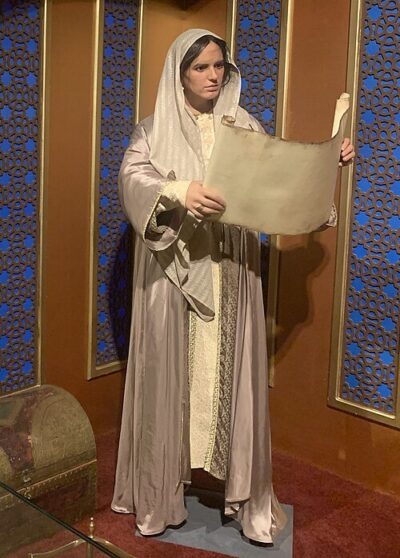
Fatima al-Fihriya
Fatima al-Fihriya was a Legendary founder of the al-Qarawiyyin mosque. Born 800, in Kairouan. Died 880, in Fez. Known for University of al-Qarawiyyin.
Facts
9 facts · 0 confirmed by two sources · 2 cited · 7 from one source
Where this comes from
Papalocal keeps its own record. It started from these sources; what each one said is kept here as it was copied, so a change on their side never changes this page by itself. Tap one to read its version.
What Wikidata says · copied November 16, 2026 · revision 2570452259
- Described as
- Legendary founder of the al-Qarawiyyin mosque
- Other names
- Fatima al Fihri
- Born
- 800
- Died
- 880
- Born in
- Kairouan · 1 reference
- Died in
- Fez
- Citizen of
- Abbasid Caliphate
- Occupation
- patron of the arts; donor · 1 reference
- Known for
- University of al-Qarawiyyin
- Religion
- Islam
- Wikipedias with a page
- 44
Wikidata item Q182363 (wikidata.org/wiki/Q182363), public domain (CC0). Copied November 16, 2026.
What Wikipedia says · copied November 16, 2026 · revision 1381984504
Fatima bint Muhammad al-Fihriya al-Qurashiyya (Arabic: فاطمة بنت محمد الفهرية القرشية), known in shorter form as Fatima al-Fihriya or Fatima al-Fihri, was an Arab woman who is credited with founding the al-Qarawiyyin Mosque in 857–859 CE in Fez, Morocco. She is also known as Umm al-Banīn ("Mother of the Sons"). Al-Fihriya died around 880 CE. The al-Qarawiyyin Mosque subsequently developed into a teaching institution, which became the modern University of al-Qarawiyyin in 1963. Her story is told by Ibn Abi Zar' (d. between 1310 and 1320) in The Garden of Pages (Rawd al-Qirtas) as founder of the mosque. Since she was first mentioned many centuries after her death, her story has been hard to substantiate and some modern historians doubt her existence.
From the Wikipedia article “Fatima al-Fihriya” (en.wikipedia.org/wiki/Fatima_al-Fihriya), by its contributors, under CC BY-SA 4.0 (creativecommons.org/licenses/by-sa/4.0/). Copied November 16, 2026; not changed.
Confirmed Two sources agree. Cited One source, and it names where it got it. One source One source, without a reference of its own. Sources disagree The sources disagree. We show the best-supported value and keep theirs below.
