
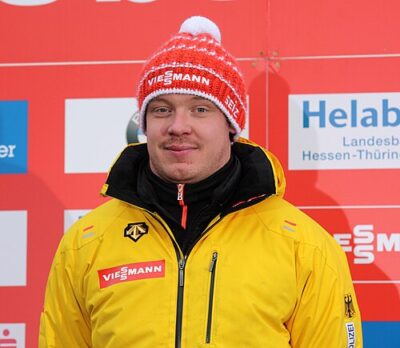
Felix Loch is a German luger. Born July 24, 1989, in Sonneberg. Awards include Silbernes Lorbeerblatt and Sparkasse Prize for Cult-Figures of Sport.
Facts
10 facts · 1 confirmed by two sources · 4 cited · 5 from one source
Where this comes from
Papalocal keeps its own record. It started from these sources; what each one said is kept here as it was copied, so a change on their side never changes this page by itself. Tap one to read its version.
What Wikidata says · copied November 17, 2026 · revision 2569409212
- Described as
- German luger
- Born
- July 24, 1989 · 1 reference
- Born in
- Sonneberg · 1 reference
- Citizen of
- Germany; East Germany
- Occupation
- luger · 1 reference
- Sport
- luge · 1 reference
- Awards
- Silbernes Lorbeerblatt · 1 reference; Sparkasse Prize for Cult-Figures of Sport (2022) · 1 reference
- Father
- Norbert Loch
- Height
- 1.91 m (6 ft 3 in)
- Wikipedias with a page
- 27
Wikidata item Q60711 (wikidata.org/wiki/Q60711), public domain (CC0). Copied November 17, 2026.
What Wikipedia says · copied November 17, 2026 · revision 1373332156
Felix Loch (German pronunciation: [ˈfeːlɪks ˈlɔx]; born 24 July 1989) is a German luger and Olympic champion. He has been competing since 1995 and on the German national team since 2006. He has won fourteen medals at the FIL World Luge Championships, including twelve golds (Men's singles: 2008, 2009, 2012, 2013, 2015, 2016; Men's sprint 2016: Mixed team event: 2008, 2009, 2012, 2013, 2015, 2016) and two silvers (Men's singles: 2011, 2015). Loch's men's singles win in 2008 made him the youngest world champion ever at 18 years old. He is the youngest Olympic Gold Medalist in men's luge history. As of 2022, Loch is a triple Olympic gold medalist.
- Born, in its opening lines
- July 24, 1989
From the Wikipedia article “Felix Loch” (en.wikipedia.org/wiki/Felix_Loch), by its contributors, under CC BY-SA 4.0 (creativecommons.org/licenses/by-sa/4.0/). Copied November 17, 2026; not changed.
Confirmed Two sources agree. Cited One source, and it names where it got it. One source One source, without a reference of its own. Sources disagree The sources disagree. We show the best-supported value and keep theirs below.
