
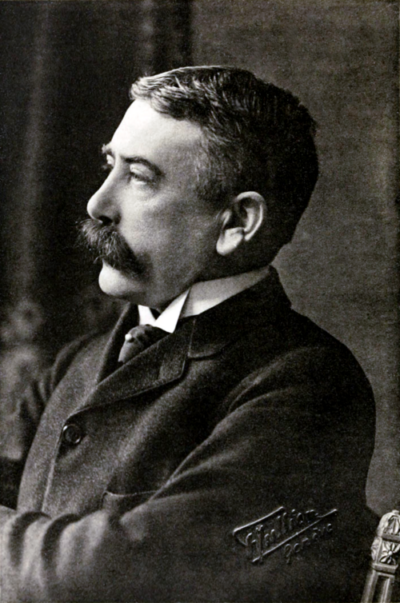
Ferdinand de Saussure
Ferdinand de Saussure was a Swiss linguist and philosopher. Born November 26, 1857, in Geneva. Died February 22, 1913, in Vufflens Castle. Known for semiology, structural linguistics and Geneva School. Educated at University of Geneva and Leipzig University.
Facts
30 facts · 2 confirmed by two sources · 8 cited · 20 from one source
Where this comes from
Papalocal keeps its own record. It started from these sources; what each one said is kept here as it was copied, so a change on their side never changes this page by itself. Tap one to read its version.
What Wikidata says · copied November 16, 2026 · revision 2560173341
- Described as
- Swiss linguist and philosopher (1857–1913)
- Other names
- Ferdinand de Saussure-Faesch, Saussure, Ferdinand Saussure
- Born
- November 26, 1857 · 7 references
- Died
- February 22, 1913 · 10 references
- Born in
- Geneva · 3 references
- Died in
- Vufflens Castle · 1 reference
- Citizen of
- Switzerland
- Occupation
- linguist · 1 reference; pedagogue; university teacher; sociologist; philosopher; phonologist; Indo-Europeanist · 1 reference
- Worked for
- École pratique des hautes études (1880–1891); University of Geneva (1891–1913)
- Education
- University of Geneva (1875–1876); Leipzig University (1876–1880); Collège Calvin
- Known for
- semiology; structural linguistics; Geneva School; Course in General Linguistics
- Field
- structural linguistics
- Spouse
- Marie Faesch (1892–) · 1 reference
- Children
- Raymond de Saussure; Jacques de Saussure
- Father
- Henri de Saussure
- Siblings
- René de Saussure · 1 reference; Léopold de Saussure · 1 reference; Horace de Saussure · 1 reference
- Religion
- reformed · 1 reference
- Wikipedias with a page
- 107
Wikidata item Q13230 (wikidata.org/wiki/Q13230), public domain (CC0). Copied November 16, 2026.
What Wikipedia says · copied November 16, 2026 · revision 1384954308
Ferdinand Mongin de Saussure (; French: [fɛʁdinɑ̃ də sosyʁ]; 26 November 1857 – 22 February 1913) was a Swiss linguist, semiotician and philosopher. His ideas laid a foundation for many significant developments in both linguistics and semiotics in the 20th century. He is widely considered one of the founders of 20th-century linguistics and one of two major founders (together with Charles Sanders Peirce) of semiotics, or semiology, as Saussure called it.
One of his translators, Roy Harris, summarized Saussure's contribution to linguistics and the study of "the whole range of human sciences. It is particularly marked in linguistics, philosophy, psychoanalysis, psychology, sociology and anthropology." Although they have undergone extension and critique over time, the dimensions of organization introduced by Saussure continue to inform contemporary approaches to the phenomenon of language. As Leonard Bloomfield stated after reviewing Saussure's work: "he has given us the theoretical basis for a science of human speech".
- Born, in its opening lines
- November 26, 1857
- Died, in its opening lines
- February 22, 1913
From the Wikipedia article “Ferdinand de Saussure” (en.wikipedia.org/wiki/Ferdinand_de_Saussure), by its contributors, under CC BY-SA 4.0 (creativecommons.org/licenses/by-sa/4.0/). Copied November 16, 2026; not changed.
Confirmed Two sources agree. Cited One source, and it names where it got it. One source One source, without a reference of its own. Sources disagree The sources disagree. We show the best-supported value and keep theirs below.
