
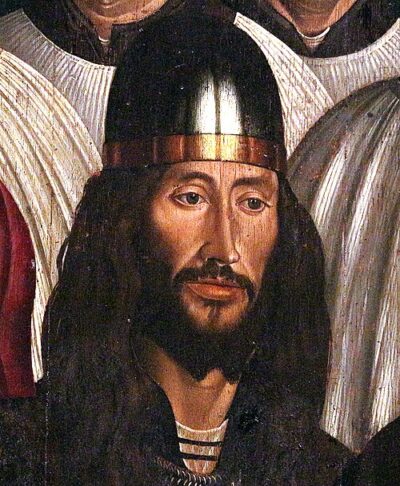
Ferdinand the Holy Prince
Ferdinand the Holy Prince was an infante of the Kingdom of Portugal. Born September 29, 1402, in Santarém. Died June 5, 1443, in Fez. Awards include Grand Master of the Order of Aviz.
Facts
19 facts · 2 confirmed by two sources · 4 cited · 13 from one source
Where this comes from
Papalocal keeps its own record. It started from these sources; what each one said is kept here as it was copied, so a change on their side never changes this page by itself. Tap one to read its version.
What Wikidata says · copied November 18, 2026 · revision 2567686939
- Described as
- infante of the Kingdom of Portugal (1402–1443)
- Other names
- Infante of Portugal Ferdinand, Infante Santo Fernando, Infante of Portugal Fernando, the Constant Ferdinand, Fernando o Infante Santo
- Born
- September 29, 1402 · 1 reference
- Died
- June 5, 1443 · 1 reference
- Born in
- Santarém · 1 reference
- Died in
- Fez · 2 references
- Buried in
- Batalha Monastery
- Citizen of
- Kingdom of Portugal
- Occupation
- military personnel
- Awards
- Grand Master of the Order of Aviz
- Father
- John I of Portugal · 1 reference
- Mother
- Philippa of Lancaster
- Siblings
- Beatrice, Countess of Arundel; Isabella of Portugal, Duchess of Burgundy; Prince Henry the Navigator; Edward I of Portugal; Peter, Duke of Coimbra; Afonso I; John, Constable of Portugal
- Religion
- Catholicism
- Lived in
- Évora · 1 reference
- Wikipedias with a page
- 22
Wikidata item Q552022 (wikidata.org/wiki/Q552022), public domain (CC0). Copied November 18, 2026.
What Wikipedia says · copied November 18, 2026 · revision 1377490931
Ferdinand the Holy Prince (Portuguese pronunciation: [fɨɾˈnɐ̃du]; Portuguese: Fernando o Infante Santo; 29 September 1402 – 5 June 1443), sometimes called the "Saint Prince" or the "Constant Prince", was an infante of the Kingdom of Portugal. He was the youngest of the "Illustrious Generation" of 15th-century Portuguese princes of the House of Aviz, and served as lay administrator of the Knightly Order of Aviz.
In 1437, Ferdinand participated in the disastrous Siege of Tangier led by his older brother Henry the Navigator. In the aftermath, Ferdinand was handed over to the Marinid rulers of Morocco as a hostage for the surrender of Ceuta in accordance with the terms of a treaty negotiated between the rulers of Portugal and Morocco by Henry. At first, Ferdinand was held in relative comfort as a noble hostage in Asilah, but when it became apparent that the Portuguese authorities had no intention of giving up Ceuta, Ferdinand's status was downgraded; he was transferred to a prison in Fez, where he was subjected to much harsher incarceration conditions by his jailers. Negotiations for his release continued intermittently for years, but they came to naught, and Ferdinand eventually died in captivity in Fez on 5 June 1443.
A popular cult quickly developed in Portugal around the figure of "the Holy Prince" (O Infante Santo), strongly encouraged by the House of Aviz. Ferdinand remains a "popular saint" by Portuguese tradition, neither beatified nor canonized by the Catholic Church.
- Born, in its opening lines
- September 29, 1402
- Died, in its opening lines
- June 5, 1443
From the Wikipedia article “Ferdinand the Holy Prince” (en.wikipedia.org/wiki/Ferdinand_the_Holy_Prince), by its contributors, under CC BY-SA 4.0 (creativecommons.org/licenses/by-sa/4.0/). Copied November 18, 2026; not changed.
Confirmed Two sources agree. Cited One source, and it names where it got it. One source One source, without a reference of its own. Sources disagree The sources disagree. We show the best-supported value and keep theirs below.
