
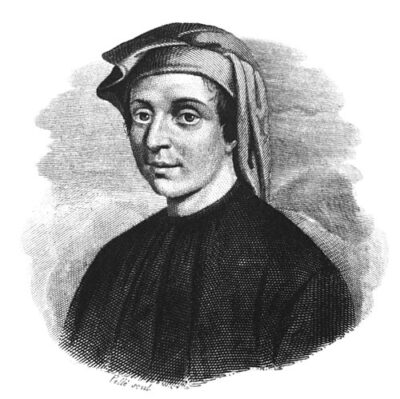
Fibonacci
Fibonacci was an Italian mathematician (c. 1170–c. 1240/50). Born 1170, in Pisa. Died 13th century, in Pisa. Known for Fibonacci sequence, Liber Abaci and Fibonacci number.
Facts
17 facts · 0 confirmed by two sources · 8 cited · 9 from one source
Where this comes from
Papalocal keeps its own record. It started from these sources; what each one said is kept here as it was copied, so a change on their side never changes this page by itself. Tap one to read its version.
What Wikidata says · copied November 16, 2026 · revision 2567562704
- Described as
- Italian mathematician (c. 1170–c. 1240/50)
- Other names
- Leonardo Bigollo, Leonardo Pisano, Leonardo of Pisa, Leonardo Pisano Bigollo, Leonardo Fibonacci, Leonardo Pisano Fibonacci, Leonardo Bonacci
- Born
- 1170 · 3 references
- Died
- 13th century · 1 reference
- Born in
- Pisa · 2 references
- Died in
- Pisa · 1 reference
- Citizen of
- Republic of Pisa
- Occupation
- mathematician · 2 references; master of calculations
- Known for
- Fibonacci sequence; Liber Abaci; Fibonacci number; The Book of Squares; Brahmagupta–Fibonacci identity; Practica geometriae
- Field
- number theory · 1 reference; mathematics · 1 reference
- Father
- Guglielmo Bonacci · 1 reference
- Religion
- Christianity
- Wikipedias with a page
- 126
Wikidata item Q8763 (wikidata.org/wiki/Q8763), public domain (CC0). Copied November 16, 2026.
What Wikipedia says · copied November 16, 2026 · revision 1385561567
Leonardo Bonacci, also Leonardo da Pisa (c. 1170 – c. 1240-50), commonly known as Fibonacci, was an Italian mathematician from the Republic of Pisa, considered to be "the most talented Western mathematician of the Middle Ages".
The name he is commonly called, Fibonacci, is first found in a modern source in a 1838 text by the Franco-Italian mathematician Guglielmo Libri and is short for filius Bonacci ('son of Bonacci'). However, even as early as 1506, Perizolo, a notary of the Holy Roman Empire, mentions him as "Lionardo Fibonacci".
Fibonacci popularized the Indo–Arabic numeral system in the Western world primarily through his composition in 1202 of Liber Abaci (Book of Calculation) and also introduced Europe to the sequence of Fibonacci numbers, which he used as an example in Liber Abaci.
From the Wikipedia article “Fibonacci” (en.wikipedia.org/wiki/Fibonacci), by its contributors, under CC BY-SA 4.0 (creativecommons.org/licenses/by-sa/4.0/). Copied November 16, 2026; not changed.
Confirmed Two sources agree. Cited One source, and it names where it got it. One source One source, without a reference of its own. Sources disagree The sources disagree. We show the best-supported value and keep theirs below.
