
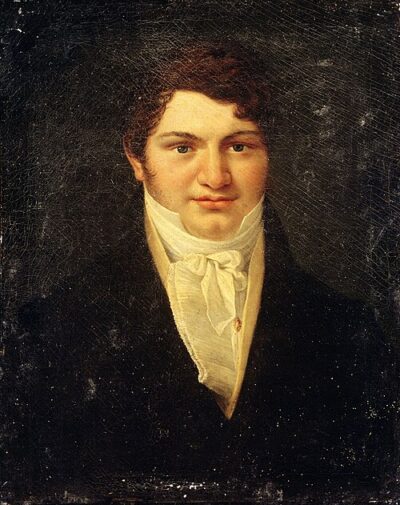
Fra Diavolo
Fra Diavolo was an Italian guerilla leader. Born April 7, 1771, in Itri. Died November 11, 1806, in Naples.
Facts
10 facts · 2 confirmed by two sources · 0 cited · 8 from one source
Where this comes from
Papalocal keeps its own record. It started from these sources; what each one said is kept here as it was copied, so a change on their side never changes this page by itself. Tap one to read its version.
What Wikidata says · copied November 18, 2026 · revision 2553823013
- Described as
- Italian guerilla leader (1771-1806)
- Other names
- Michele Porsa
- Born
- April 7, 1771 · 2 references
- Died
- November 11, 1806 · 2 references
- Born in
- Itri
- Died in
- Naples
- Cause of death
- hanging to death
- Citizen of
- Kingdom of Naples · 1 reference
- Occupation
- military personnel; robber · 1 reference
- Military branch
- infantry · 1 reference
- Military rank
- colonel · 1 reference
- Wikipedias with a page
- 20
Wikidata item Q920642 (wikidata.org/wiki/Q920642), public domain (CC0). Copied November 18, 2026.
What Wikipedia says · copied November 18, 2026 · revision 1380800790
Fra Diavolo (lit. Brother Devil; 7 April 1771–11 November 1806) is the popular name given to Michele Pezza, a guerrilla leader who resisted the French occupation of Naples, proving an "inspirational practitioner of popular insurrection". Pezza figures prominently in folk lore and fiction. He appears in several works of Alexandre Dumas, including The Last Cavalier: Being the Adventures of Count Sainte-hermine in the Age of Napoleon, not published in English until 2007 and in Washington Irving's short story "The Inn at Terracina". He received the nickname as a child after behaving naughtily while dressed as a monk for a procession.
- Born, in its opening lines
- April 7, 1771
- Died, in its opening lines
- November 11, 1806
From the Wikipedia article “Fra Diavolo” (en.wikipedia.org/wiki/Fra_Diavolo), by its contributors, under CC BY-SA 4.0 (creativecommons.org/licenses/by-sa/4.0/). Copied November 18, 2026; not changed.
Confirmed Two sources agree. Cited One source, and it names where it got it. One source One source, without a reference of its own. Sources disagree The sources disagree. We show the best-supported value and keep theirs below.
