
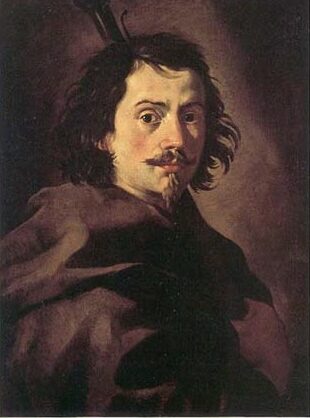
Francesco Borromini
Francesco Borromini was an Italian architect from Ticino and leading figure in Roman Baroque architecture (1599-1667), sculptor, engineer, stonemason and draughtsman. Born September 25, 1599, in Bissone. Died August 3, 1667, in Rome. Known for Saint Charles at the Four Fountains. Awards include Supreme Order of Christ.
Facts
18 facts · 1 confirmed by two sources · 9 cited · 7 from one source · 1 where the sources disagree
What’s different
- Died: we show August 3, 1667 (Sources disagree). Wikipedia says August 2, 1667
Where this comes from
Papalocal keeps its own record. It started from these sources; what each one said is kept here as it was copied, so a change on their side never changes this page by itself. Tap one to read its version.
What Wikidata says · copied November 16, 2026 · revision 2569196231
- Described as
- Italian architect from Ticino and leading figure in Roman Baroque architecture (1599-1667), sculptor, engineer, stonemason and draughtsman (1599–1667)
- Other names
- Francesco Castelli, Francesco Castello, Francesco Borromino, Francesco Boromino, Francesco Boromini, Fr. Borromini
- Born
- September 25, 1599 · 6 references
- Died
- August 3, 1667 · 3 references
- Born in
- Bissone · 2 references
- Died in
- Rome · 2 references
- Buried in
- Basilica of San Giovanni dei Fiorentini
- Name at birth
- Francesco Castelli
- Citizen of
- Switzerland
- Occupation
- architect · 5 references; sculptor · 1 reference; engineer; stonemason · 2 references; draftsperson · 1 reference; master builder · 1 reference
- Known for
- Saint Charles at the Four Fountains
- Awards
- Supreme Order of Christ (1652) · 1 reference
- Field
- baroque architecture
- Children
- Bernardo Castelli Borromini
- Religion
- Catholicism · 1 reference
- Wikipedias with a page
- 65
Wikidata item Q123150 (wikidata.org/wiki/Q123150), public domain (CC0). Copied November 16, 2026.
What Wikipedia says · copied November 16, 2026 · revision 1351531060
Francesco Borromini (, Italian: [franˈtʃesko borroˈmiːni]), byname of Francesco Castelli (Italian: [kaˈstɛlli]; 25 September 1599 – 2 August 1667), was an Italian architect born in the modern Swiss canton of Ticino who, with his contemporaries Gian Lorenzo Bernini and Pietro da Cortona, was a leading figure in the emergence of Roman Baroque architecture.
A keen student of the architecture of Michelangelo and the ruins of Antiquity, Borromini developed an inventive and distinctive, if somewhat idiosyncratic, architecture employing manipulations of Classical architectural forms, geometrical rationales in his plans, and symbolic meanings in his buildings. His soft lead drawings are particularly distinctive. He seems to have had a sound understanding of structures that perhaps Bernini and Cortona lacked, as they were principally trained in other areas of the visual arts. He appears to have been a self-taught scholar, amassing a large library by the end of his life.
His career was constrained by his personality. Unlike Bernini who easily adopted the mantle of the charming courtier in his pursuit of important commissions, Borromini was both melancholic and quick in temper, which resulted in his withdrawing from certain jobs. His conflicted character led him to a death by suicide in 1667.
Probably because his work was idiosyncratic, his subsequent influence was not widespread, but it is apparent in the Piedmontese works of Guarino Guarini and, as a fusion with the architectural modes of Bernini and Cortona, in the late Baroque architecture of Northern Europe. Later critics of the Baroque, such as Francesco Milizia and the English architect Sir John Soane, were particularly critical of Borromini's work. From the late nineteenth century onward, however, interest has revived in the works of Borromini and his architecture has become appreciated for its inventiveness.
- Born, in its opening lines
- September 25, 1599
- Died, in its opening lines
- August 2, 1667
From the Wikipedia article “Francesco Borromini” (en.wikipedia.org/wiki/Francesco_Borromini), by its contributors, under CC BY-SA 4.0 (creativecommons.org/licenses/by-sa/4.0/). Copied November 16, 2026; not changed.
Confirmed Two sources agree. Cited One source, and it names where it got it. One source One source, without a reference of its own. Sources disagree The sources disagree. We show the best-supported value and keep theirs below.
