
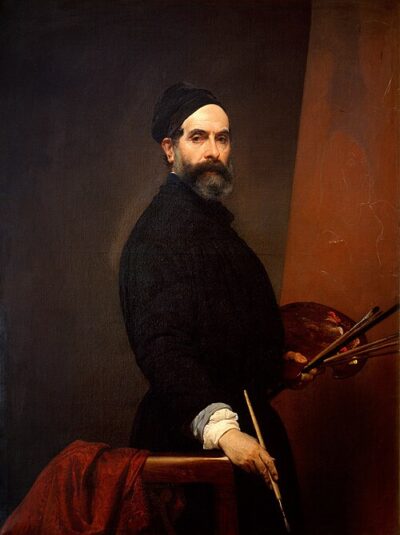
Francesco Hayez
Francesco Hayez was an Italian painter. Born February 11, 1791, in Venice. Died February 12, 1882, in Milan. Positions held include director (1850–1882). Known for The Kiss, The Victorious Athlete and Bad der Nymphen. Educated at Accademia di Belle Arti di Venezia and Accademia di San Luca.
Facts
30 facts · 1 confirmed by two sources · 9 cited · 19 from one source · 1 where the sources disagree
What’s different
- Born: we show February 11, 1791 (Sources disagree). Wikipedia says February 10, 1791
Where this comes from
Papalocal keeps its own record. It started from these sources; what each one said is kept here as it was copied, so a change on their side never changes this page by itself. Tap one to read its version.
What Wikidata says · copied November 16, 2026 · revision 2568693782
- Described as
- Italian painter (1791–1882)
- Other names
- Ajez, Hayez, Hayes, francesco hayer, francesco hayez, Francisco Hayez
- Born
- February 11, 1791 · 5 references
- Died
- February 12, 1882 · 2 references
- Born in
- Venice · 1 reference
- Died in
- Milan · 1 reference
- Buried in
- monumental cemetery of Milan
- Citizen of
- Kingdom of Italy (1861–); Austrian Empire
- Occupation
- painter · 1 reference; photographer · 1 reference; lithographer · 1 reference; graphic artist · 1 reference; engraver · 1 reference
- Positions held
- director (1850–1882) · 1 reference
- Worked for
- Brera Academy
- Education
- Accademia di Belle Arti di Venezia · 1 reference; Accademia di San Luca; Accademia del Regno italico
- Genre
- history painting; portrait painting
- Known for
- The Kiss; The Victorious Athlete; Bad der Nymphen; The destruction of the temple of Jerusalem; Christ and the woman taken in adultery; The Last Meeting between Jacopo Foscari and his Family Before Being Sent into Exile · 1 reference; Portrait of Matilde Juva Branca · 1 reference; Bathsheba Bathing · 2 references; Crucifix and the Magdalene kneeling and crying · 1 reference; The Two Foscari · 1 reference
- Field
- painting · 1 reference
- Wikipedias with a page
- 52
Wikidata item Q223725 (wikidata.org/wiki/Q223725), public domain (CC0). Copied November 16, 2026.
What Wikipedia says · copied November 16, 2026 · revision 1380461034
Francesco Hayez (Italian: [franˈtʃesko ˈaːjets]; 10 February 1791 – 12 February 1882) was an Italian painter. He is considered one of the leading artists of Romanticism in mid-19th-century Milan, and is known for his grand historical paintings, political allegories, and portraits, in an Italian version of 19th-century Academic style.
- Born, in its opening lines
- February 10, 1791
- Died, in its opening lines
- February 12, 1882
From the Wikipedia article “Francesco Hayez” (en.wikipedia.org/wiki/Francesco_Hayez), by its contributors, under CC BY-SA 4.0 (creativecommons.org/licenses/by-sa/4.0/). Copied November 16, 2026; not changed.
Confirmed Two sources agree. Cited One source, and it names where it got it. One source One source, without a reference of its own. Sources disagree The sources disagree. We show the best-supported value and keep theirs below.
