
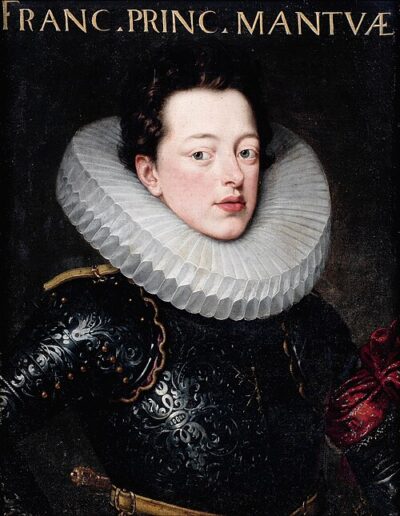
Francesco IV Gonzaga, Duke of Mantua
Francesco IV Gonzaga, Duke of Mantua was a Duke of Mantua and Montferrat. Born May 7, 1586, in Mantua. Died December 22, 1612, in Mantua. Positions held include Duke of Montferrat (1612) and Duke of Màntua (1612). Awards include Blood of Jesus Christ.
Facts
19 facts · 2 confirmed by two sources · 0 cited · 17 from one source
Where this comes from
Papalocal keeps its own record. It started from these sources; what each one said is kept here as it was copied, so a change on their side never changes this page by itself. Tap one to read its version.
What Wikidata says · copied November 18, 2026 · revision 2563095618
- Described as
- Duke of Mantua and Montferrat (1586-1612)
- Other names
- Francesco IV Gonzaga
- Born
- May 7, 1586 · 1 reference
- Died
- December 22, 1612
- Born in
- Mantua
- Died in
- Mantua
- Buried in
- Basilica Palatina di Santa Barbara
- Cause of death
- smallpox
- Occupation
- politician
- Positions held
- Duke of Montferrat (1612); Duke of Màntua (1612)
- Awards
- Blood of Jesus Christ
- Spouse
- Margaret of Savoy (1608–) · 1 reference
- Children
- Maria Gonzaga, Duchess of Montferrat
- Father
- Vincenzo I Gonzaga
- Mother
- Eleanor de' Medici
- Siblings
- Margherita Gonzaga, Duchess of Lorraine; Eleonora Gonzaga; Vincenzo II Gonzaga, Duke of Mantua; Ferdinando Gonzaga, Duke of Mantua
- Religion
- Catholicism
- Wikipedias with a page
- 22
Wikidata item Q714803 (wikidata.org/wiki/Q714803), public domain (CC0). Copied November 18, 2026.
What Wikipedia says · copied November 18, 2026 · revision 1353225779
Francesco IV Gonzaga (7 May 1586 – 22 December 1612) was Duke of Mantua and Montferrat between 9 February and 22 December 1612.
- Born, in its opening lines
- May 7, 1586
- Died, in its opening lines
- December 22, 1612
From the Wikipedia article “Francesco IV Gonzaga” (en.wikipedia.org/wiki/Francesco_IV_Gonzaga), by its contributors, under CC BY-SA 4.0 (creativecommons.org/licenses/by-sa/4.0/). Copied November 18, 2026; not changed.
Confirmed Two sources agree. Cited One source, and it names where it got it. One source One source, without a reference of its own. Sources disagree The sources disagree. We show the best-supported value and keep theirs below.
