
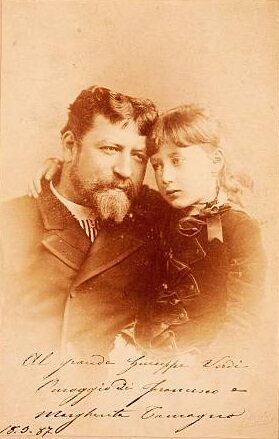
Francesco Tamagno
Francesco Tamagno was an Italian operatic singer. Born December 28, 1850, in Turin. Died August 31, 1905, in Varese.
Facts
8 facts · 2 confirmed by two sources · 3 cited · 3 from one source
Where this comes from
Papalocal keeps its own record. It started from these sources; what each one said is kept here as it was copied, so a change on their side never changes this page by itself. Tap one to read its version.
What Wikidata says · copied November 18, 2026 · revision 2567430610
- Described as
- Italian operatic singer (1850–1905)
- Born
- December 28, 1850 · 6 references
- Died
- August 31, 1905 · 6 references
- Born in
- Turin · 2 references
- Died in
- Varese · 1 reference
- Buried in
- Monumental Cemetery of Turin
- Citizen of
- Kingdom of Italy (1861–)
- Occupation
- opera singer · 1 reference
- Instrument
- voice
- Wikipedias with a page
- 21
Wikidata item Q1248319 (wikidata.org/wiki/Q1248319), public domain (CC0). Copied November 18, 2026.
What Wikipedia says · copied November 18, 2026 · revision 1381433284
Francesco Tamagno (28 December 1850 – 31 August 1905) was an Italian operatic dramatic tenor who sang with enormous success throughout Europe and America. On 5 February 1887, he sang Otello in the first performance of Giuseppe Verdi's opera. He is also the earliest Italian tenor of note to have left a sizeable body of recordings of his voice. He was one of the first international male public figures to admit that he was the single parent and caregiver of a daughter from her birth.
- Born, in its opening lines
- December 28, 1850
- Died, in its opening lines
- August 31, 1905
From the Wikipedia article “Francesco Tamagno” (en.wikipedia.org/wiki/Francesco_Tamagno), by its contributors, under CC BY-SA 4.0 (creativecommons.org/licenses/by-sa/4.0/). Copied November 18, 2026; not changed.
Confirmed Two sources agree. Cited One source, and it names where it got it. One source One source, without a reference of its own. Sources disagree The sources disagree. We show the best-supported value and keep theirs below.
