
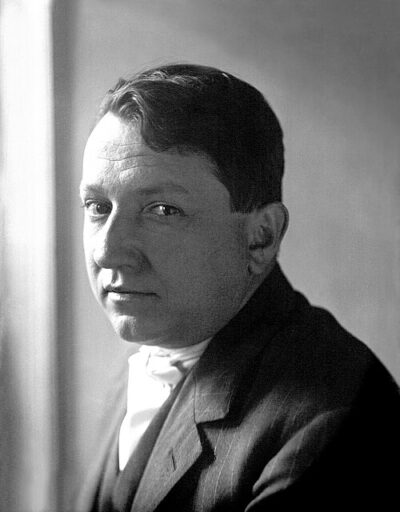
Francis Carco
Francis Carco was a New Caledonian-born French writer. Born July 3, 1886, in Nouméa. Died May 26, 1958, in 4th arrondissement of Paris. Awards include Grand Prix du roman de l'Académie française, Knight of the Legion of Honour and Commander of the Legion of Honour.
Facts
22 facts · 2 confirmed by two sources · 9 cited · 11 from one source
Where this comes from
Papalocal keeps its own record. It started from these sources; what each one said is kept here as it was copied, so a change on their side never changes this page by itself. Tap one to read its version.
What Wikidata says · copied November 18, 2026 · revision 2563137599
- Described as
- New Caledonian-born French writer
- Other names
- François Carcopino-Tusoli
- Born
- July 3, 1886 · 9 references
- Died
- May 26, 1958 · 9 references
- Born in
- Nouméa · 1 reference
- Died in
- 4th arrondissement of Paris · 1 reference
- Buried in
- Cimetière parisien de Bagneux
- Cause of death
- Parkinson's disease
- Name at birth
- François Marie Alexandre Carcopino-Tusoli
- Citizen of
- France
- Occupation
- poet · 1 reference; writer · 1 reference; journalist · 1 reference; songwriter; novelist; biographer · 1 reference; playwright · 1 reference
- Genre
- art of poetry
- Awards
- Grand Prix du roman de l'Académie française (1922) · 1 reference; Knight of the Legion of Honour (1925); Commander of the Legion of Honour (1949); Officer of the Legion of Honour (1932); Grand Prix littéraire de la Ville de Paris (1957) · 1 reference
- Spouse
- Germaine Carco · 1 reference
- Wikipedias with a page
- 20
Wikidata item Q510114 (wikidata.org/wiki/Q510114), public domain (CC0). Copied November 18, 2026.
What Wikipedia says · copied November 18, 2026 · revision 1371871355
Francis Carco (born François Carcopino-Tusoli) (3 July 1886 – 26 May 1958) was a French author, born at Nouméa, New Caledonia. He was a poet, belonging to the Fantaisiste school, a novelist, a dramatist, and art critic for L'Homme libre and Gil Blas. During World War I he became an aviation pilot at Étampes, after studying at the aviation school there. His works are picturesque, painting as they do the street life of Montmartre, and often being written in the argot of Paris. He has been called the "romancier des apaches." His memoir, The Last Bohemia: From Montmartre to the Latin Quarter, contains reminiscences of bohemian life in Paris during the early years of the 20th century.
He had an affair with the short story writer Katherine Mansfield in February 1915. The narrator Raoul Duquette of her story Je ne parle pas français (who has a cynical attitude to love and sex) is partly based on him, and her story An Indiscreet Journey is based on her journey through the war zone to spend four nights with Corporal Francis Carco near Gray. She saved as a memento of him a fake letter from "Julie Boiffard" asking her to visit (which is now held in the Turnbull Library). She also wrote a letter to her husband from Carco's Paris flat on 8/9 May 1915.
Carco held the ninth seat at Académie Goncourt from 1937 to 1958. He is buried in the Cimetière de Bagneux. He was the author of:Instincts (1911)
Jésus-la-Caille (novel, 1914)
Les Innocents (1917)
Au coin des rues (tales, 1918, 1922)
Les Malheurs de Fernande (sequel to Jésus-la-Caille, 1918)
Les Mystères de la Morgue ou les Fiancés du IVº arrondissement. Roman gai (1918)
L'Equipe (1919)
La Poésie (1919)
Maman Petitdoigt (1920)
Francis Carco, raconté par lui-meme (1921; in the collection Ceux dont on parle, edited by Marc Saunier and published by R. Chiberre)
Promenades pittoresques à Montmartre (1922)
L'homme traqué (1922; Grand Prix du roman de l'Académie française)
Vérotchka l'Étrangère ou le Gout du malheur (1923)
Perversité (1925) (the English translation of this by Jean Rhys was mis-attributed to Ford Madox Ford under murky circumstances)
Le Roman de François Villon (1926), a heavily fictionalised biography of the 15th-century poet
La lumière noire (1934)
Brumes (1935)
Panam, prose-poem of Paris Madam, (1922; Librairie Stock): "Of all the pleasures, it is those of the night that I prefer, when the street glitters in the fog and around the corner in a cul-de-sac glows the red light with the three letters of that magnetic word: Bal."
- Born, in its opening lines
- July 3, 1886
- Died, in its opening lines
- May 26, 1958
From the Wikipedia article “Francis Carco” (en.wikipedia.org/wiki/Francis_Carco), by its contributors, under CC BY-SA 4.0 (creativecommons.org/licenses/by-sa/4.0/). Copied November 18, 2026; not changed.
Confirmed Two sources agree. Cited One source, and it names where it got it. One source One source, without a reference of its own. Sources disagree The sources disagree. We show the best-supported value and keep theirs below.
