
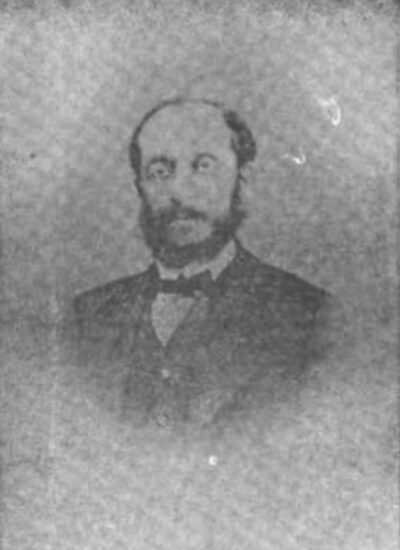
Francis Marrash
Francis Marrash was a Syrian writer and poet. Born June 29, 1836, in Aleppo. Died May 21, 1874, in Aleppo. Known for Ghabat al-Haqq.
Facts
13 facts · 0 confirmed by two sources · 5 cited · 7 from one source · 1 where the sources disagree
What’s different
- Born: we show June 29, 1836 (Sources disagree). Wikidata also lists 1836
Where this comes from
Papalocal keeps its own record. It started from these sources; what each one said is kept here as it was copied, so a change on their side never changes this page by itself. Tap one to read its version.
What Wikidata says · copied November 17, 2026 · revision 2570554867
- Described as
- Syrian writer and poet (1836–1874)
- Other names
- Francis bin Fathallah bin Nasrallah Marrash, Francis al-Marrash, Francis Marrash al-Halabi
- Born
- June 29, 1836 · 3 references; 1836 · 1 reference
- Died
- May 21, 1874 · 2 references
- Born in
- Aleppo · 1 reference
- Died in
- Aleppo
- Citizen of
- Ottoman Empire (1867–)
- Occupation
- poet; writer · 2 references; physician; opinion journalist · 1 reference; literary scholar · 1 reference
- Known for
- Ghabat al-Haqq
- Siblings
- Abdallah Marrash; Maryana Marrash
- Wikipedias with a page
- 27
Wikidata item Q4899 (wikidata.org/wiki/Q4899), public domain (CC0). Copied November 17, 2026.
What Wikipedia says · copied November 17, 2026 · revision 1379808674
Francis bin Fathallah bin Nasrallah Marrash (Arabic: فرنسيس بن فتح الله بن نصر الله مرّاش, ALA-LC: Fransīs bin Fatḥ Allāh bin Naṣr Allāh Marrāsh; 1835 or 29 June 1836 – 1874), also known as Francis al-Marrash or Francis Marrash al-Halabi, was a Syrian scholar, publicist, writer and poet of the Nahda or the Arab Renaissance, and a physician. Most of his works revolve around science, history and religion, analysed under an epistemological light. He traveled throughout West Asia and France in his youth, and after some medical training and a year of practice in his native Aleppo, during which he wrote several works, he enrolled in a medical school in Paris; yet, declining health and growing blindness forced him to return to Aleppo, where he produced more literary works until his early death.
Historian Matti Moosa considered Marrash to have been the first truly cosmopolitan Arab intellectual and writer of modern times. Marrash adhered to the principles of the French Revolution and defended them in his own works, implicitly criticizing Ottoman rule in West Asia and North Africa. He was also influential in introducing French romanticism in the Arab world, especially through his use of poetic prose and prose poetry, of which his writings were the first examples in modern Arabic literature, according to Salma Khadra Jayyusi and Shmuel Moreh. His modes of thinking and feeling, and ways of expressing them, have had a lasting influence on contemporary Arab thought and on the Mahjari poets.
From the Wikipedia article “Francis Marrash” (en.wikipedia.org/wiki/Francis_Marrash), by its contributors, under CC BY-SA 4.0 (creativecommons.org/licenses/by-sa/4.0/). Copied November 17, 2026; not changed.
Confirmed Two sources agree. Cited One source, and it names where it got it. One source One source, without a reference of its own. Sources disagree The sources disagree. We show the best-supported value and keep theirs below.
