
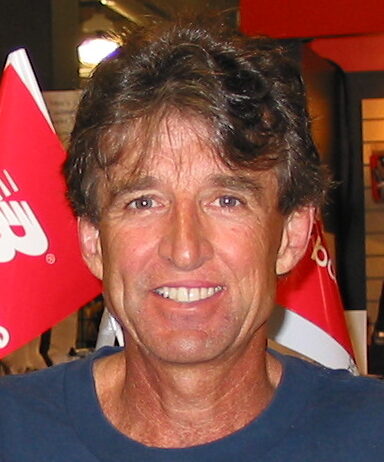
Frank Shorter
Frank Shorter is an American long-distance runner. Born October 31, 1947, in Munich. Educated at Yale University and University of Florida.
Facts
21 facts · 1 confirmed by two sources · 8 cited · 12 from one source
Where this comes from
Papalocal keeps its own record. It started from these sources; what each one said is kept here as it was copied, so a change on their side never changes this page by itself. Tap one to read its version.
What Wikidata says · copied November 15, 2026 · revision 2564938027
- Described as
- American long-distance runner
- Other names
- Frank Charles Shorter
- Born
- October 31, 1947 · 3 references
- Born in
- Munich · 1 reference
- Name at birth
- Frank Charles Shorter
- Citizen of
- United States
- Occupation
- marathon runner; long-distance runner; athletics competitor · 1 reference; sprinter; runner · 1 reference; athlete · 2 references
- Education
- Yale University · 1 reference; University of Florida; Fredric G. Levin College of Law; Northfield Mount Hermon School; Morse College
- Sport
- athletics · 1 reference
- Field
- sport · 1 reference; running · 1 reference; long-distance running · 1 reference; marathon · 1 reference
- Height
- 1.78 m (5 ft 10 in) · 1 reference
- Wikipedias with a page
- 30
Wikidata item Q508407 (wikidata.org/wiki/Q508407), public domain (CC0). Copied November 15, 2026.
What Wikipedia says · copied November 15, 2026 · revision 1361173087
Frank Charles Shorter (born October 31, 1947) is an American former long-distance runner who won the gold medal in the marathon at the 1972 Summer Olympics and the silver medal at the 1976 Summer Olympics. His Olympic success, along with the achievements of other American runners, is credited with igniting the running boom in the United States during the 1970s.
- Born, in its opening lines
- October 31, 1947
From the Wikipedia article “Frank Shorter” (en.wikipedia.org/wiki/Frank_Shorter), by its contributors, under CC BY-SA 4.0 (creativecommons.org/licenses/by-sa/4.0/). Copied November 15, 2026; not changed.
Confirmed Two sources agree. Cited One source, and it names where it got it. One source One source, without a reference of its own. Sources disagree The sources disagree. We show the best-supported value and keep theirs below.
