
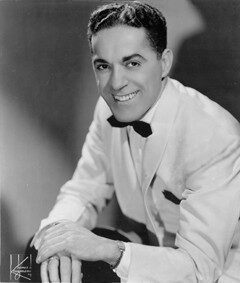
Frankie Carle
Frankie Carle was an American pianist and bandleader. Born March 25, 1903, in Providence. Died March 7, 2001, in Mesa. Known for Sunrise Serenade. Awards include star on Hollywood Walk of Fame.
Facts
16 facts · 2 confirmed by two sources · 0 cited · 14 from one source
Where this comes from
Papalocal keeps its own record. It started from these sources; what each one said is kept here as it was copied, so a change on their side never changes this page by itself. Tap one to read its version.
What Wikidata says · copied November 18, 2026 · revision 2530005556
- Described as
- American pianist and bandleader (1903–2001)
- Other names
- Francis Nunzio Carlone
- Born
- March 25, 1903 · 4 references
- Died
- March 7, 2001 · 4 references
- Born in
- Providence
- Died in
- Mesa
- Buried in
- Forest Lawn Memorial Park
- Name at birth
- Francis Nunzio Carlone
- Citizen of
- United States
- Occupation
- pianist; bandleader; writer · 1 reference; composer · 1 reference
- Genre
- jazz
- Instrument
- piano
- Record label
- Columbia Records
- Known for
- Sunrise Serenade
- Awards
- star on Hollywood Walk of Fame · 1 reference
- Wikipedias with a page
- 16
Wikidata item Q363867 (wikidata.org/wiki/Q363867), public domain (CC0). Copied November 18, 2026.
What Wikipedia says · copied November 18, 2026 · revision 1363776895
Frankie Carle (born Francis Nunzio Carlone, March 25, 1903 – March 7, 2001) was an American pianist and bandleader. As a very popular bandleader in the 1940s and 1950s, Carle was nicknamed "The Wizard of the Keyboard" for his piano skills. "Sunrise Serenade" was Carle's best-known composition, rising to No. 1 in the US in 1938 and selling more than one million copies.
- Born, in its opening lines
- March 25, 1903
- Died, in its opening lines
- March 7, 2001
From the Wikipedia article “Frankie Carle” (en.wikipedia.org/wiki/Frankie_Carle), by its contributors, under CC BY-SA 4.0 (creativecommons.org/licenses/by-sa/4.0/). Copied November 18, 2026; not changed.
Confirmed Two sources agree. Cited One source, and it names where it got it. One source One source, without a reference of its own. Sources disagree The sources disagree. We show the best-supported value and keep theirs below.
