
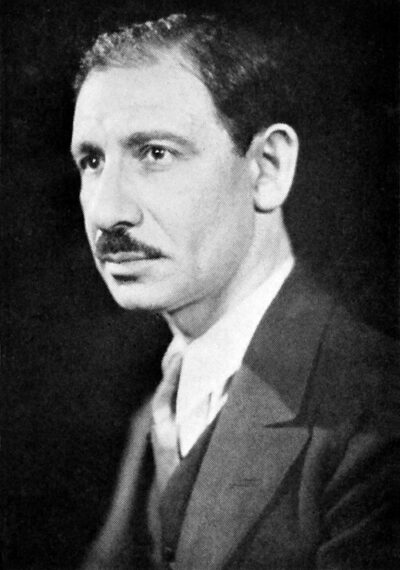
Franklin Pierce Adams
Franklin Pierce Adams was an American newspaper columnist. Born November 15, 1881, in Chicago. Died March 23, 1960, in New York City. Known for So Shines a Good Deed in a Naughty World. Educated at University of Michigan.
Facts
11 facts · 2 confirmed by two sources · 2 cited · 7 from one source
Where this comes from
Papalocal keeps its own record. It started from these sources; what each one said is kept here as it was copied, so a change on their side never changes this page by itself. Tap one to read its version.
What Wikidata says · copied November 16, 2026 · revision 2568536997
- Described as
- American newspaper columnist (1881-1960)
- Other names
- Franklin P. Adams, F.P.A.
- Born
- November 15, 1881 · 3 references
- Died
- March 23, 1960 · 3 references
- Born in
- Chicago
- Died in
- New York City
- Citizen of
- United States
- Occupation
- journalist · 1 reference; writer · 2 references
- Education
- University of Michigan
- Member of
- American Academy of Arts and Letters; Algonquin Round Table
- Known for
- So Shines a Good Deed in a Naughty World
- Wikipedias with a page
- 17
Wikidata item Q357603 (wikidata.org/wiki/Q357603), public domain (CC0). Copied November 16, 2026.
What Wikipedia says · copied November 16, 2026 · revision 1371996581
Franklin Pierce Adams (November 15, 1881 – March 23, 1960) was an American columnist known as Franklin P. Adams and by his initials F.P.A. Famed for his wit, he is best known for his newspaper column, "The Conning Tower", and his appearances as a regular panelist on radio's Information Please. A prolific writer of light verse, he was a member of the Algonquin Round Table of the 1920s and '30s.
- Born, in its opening lines
- November 15, 1881
- Died, in its opening lines
- March 23, 1960
From the Wikipedia article “Franklin P. Adams” (en.wikipedia.org/wiki/Franklin_P._Adams), by its contributors, under CC BY-SA 4.0 (creativecommons.org/licenses/by-sa/4.0/). Copied November 16, 2026; not changed.
Confirmed Two sources agree. Cited One source, and it names where it got it. One source One source, without a reference of its own. Sources disagree The sources disagree. We show the best-supported value and keep theirs below.
