
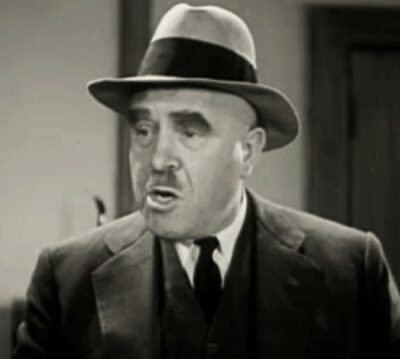
Fred Kelsey
Fred Kelsey was an actor, director, screenwriter. Born August 20, 1884, in Sandusky. Died September 2, 1961, in Hollywood.
Facts
11 facts · 2 confirmed by two sources · 1 cited · 8 from one source
Where this comes from
Papalocal keeps its own record. It started from these sources; what each one said is kept here as it was copied, so a change on their side never changes this page by itself. Tap one to read its version.
What Wikidata says · copied November 18, 2026 · revision 2567198167
- Described as
- actor, director, screenwriter (1884-1961)
- Other names
- Frederick Alvin Kelsey
- Born
- August 20, 1884 · 2 references
- Died
- September 2, 1961 · 2 references
- Born in
- Sandusky
- Died in
- Hollywood
- Buried in
- Valhalla Memorial Park Cemetery
- Citizen of
- United States
- Occupation
- actor · 1 reference; film director; television actor; screenwriter; film actor · 1 reference
- Wikipedias with a page
- 15
Wikidata item Q3086867 (wikidata.org/wiki/Q3086867), public domain (CC0). Copied November 18, 2026.
What Wikipedia says · copied November 18, 2026 · revision 1336895182
Frederick Alvin Kelsey (August 20, 1884 – September 2, 1961) was an American actor, film director, and screenwriter.
Kelsey directed one- and two-reel films for Universal Film Manufacturing Company. He appeared in more than 400 films between 1911 and 1958, often playing policemen or detectives. He also directed 37 films between 1914 and 1920. Kelsey was caricatured as the detective in the 1943 MGM cartoon Who Killed Who? directed by Tex Avery. He was born in Sandusky, Ohio and died at the Motion Picture Country Home in Hollywood, California, aged 77.
- Born, in its opening lines
- August 20, 1884
- Died, in its opening lines
- September 2, 1961
From the Wikipedia article “Fred Kelsey” (en.wikipedia.org/wiki/Fred_Kelsey), by its contributors, under CC BY-SA 4.0 (creativecommons.org/licenses/by-sa/4.0/). Copied November 18, 2026; not changed.
Confirmed Two sources agree. Cited One source, and it names where it got it. One source One source, without a reference of its own. Sources disagree The sources disagree. We show the best-supported value and keep theirs below.
