
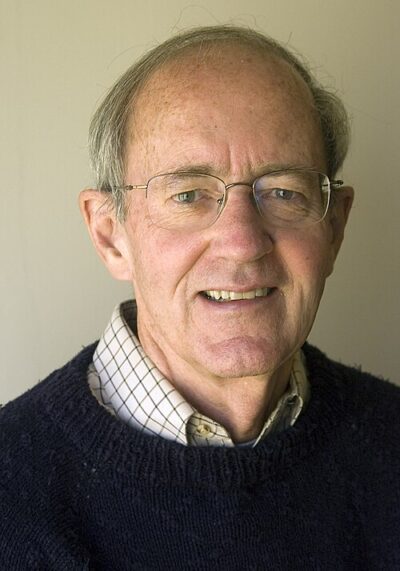
Frederick Crews
Frederick Crews was an American literary critic and writer. Born February 20, 1933, in Philadelphia. Died June 21, 2024, in Oakland. Educated at Princeton University and Yale University. Awards include PEN/Diamonstein-Spielvogel Award for the Art of the Essay, Fellow of the Committee for Skeptical Inquiry and Guggenheim Fellowship.
Facts
23 facts · 2 confirmed by two sources · 11 cited · 10 from one source
Where this comes from
Papalocal keeps its own record. It started from these sources; what each one said is kept here as it was copied, so a change on their side never changes this page by itself. Tap one to read its version.
What Wikidata says · copied November 19, 2026 · revision 2566821369
- Described as
- American literary critic and writer
- Other names
- Frederick C. Crews, Frederick Campbell Crews
- Born
- February 20, 1933
- Died
- June 21, 2024 · 1 reference
- Born in
- Philadelphia · 1 reference
- Died in
- Oakland · 1 reference
- Citizen of
- United States
- Occupation
- literary critic · 1 reference; journalist; writer · 1 reference; essayist · 2 references; university teacher · 2 references; philologist · 1 reference; literary scholar · 1 reference
- Worked for
- University of California, Berkeley
- Education
- Princeton University (–1958); Yale University (–1955)
- Awards
- PEN/Diamonstein-Spielvogel Award for the Art of the Essay (1993); Fellow of the Committee for Skeptical Inquiry; Guggenheim Fellowship · 1 reference
- Field
- American literature · 1 reference; literature · 1 reference; literary criticism · 1 reference; essay · 1 reference
- Lived in
- Berkeley · 1 reference
- Wikipedias with a page
- 11
Wikidata item Q3087101 (wikidata.org/wiki/Q3087101), public domain (CC0). Copied November 19, 2026.
What Wikipedia says · copied November 19, 2026 · revision 1385401446
Frederick Campbell Crews (February 20, 1933 – June 21, 2024) was an American essayist and literary critic. Professor of English at the University of California, Berkeley, Crews was the author of numerous books, including The Tragedy of Manners: Moral Drama in the Later Novels of Henry James (1957), E. M. Forster: The Perils of Humanism (1962), and The Sins of the Fathers: Hawthorne's Psychological Themes (1966), a discussion of the work of Nathaniel Hawthorne. He received popular attention for The Pooh Perplex (1963), a book of satirical essays parodying various schools of literary criticism. Initially a proponent of psychoanalytic literary criticism, Crews later rejected psychoanalysis, becoming a critic of Sigmund Freud and his scientific and ethical standards. Crews was a prominent participant in the "Freud wars" of the 1980s and 1990s, a debate over the reputation, scholarship, and impact on the 20th century of Freud, who founded psychoanalysis. In 2017, he published Freud: The Making of an Illusion.
Crews published a variety of skeptical and rationalist essays, including book reviews and commentary for The New York Review of Books, on a variety of topics including Freud and recovered memory therapy, some of which were published in The Memory Wars (1995). He also published successful handbooks for college writers, such as The Random House Handbook.
- Born, in its opening lines
- February 20, 1933
- Died, in its opening lines
- June 21, 2024
From the Wikipedia article “Frederick Crews” (en.wikipedia.org/wiki/Frederick_Crews), by its contributors, under CC BY-SA 4.0 (creativecommons.org/licenses/by-sa/4.0/). Copied November 19, 2026; not changed.
Confirmed Two sources agree. Cited One source, and it names where it got it. One source One source, without a reference of its own. Sources disagree The sources disagree. We show the best-supported value and keep theirs below.
