
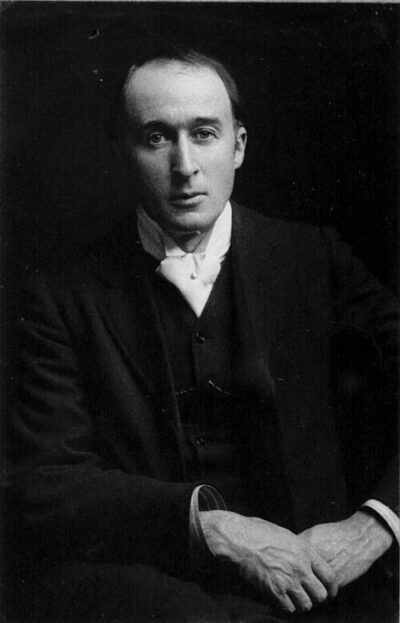
Frederick Delius
Frederick Delius was an English composer. Born January 29, 1862, in Bradford. Died June 10, 1934, in Grez-sur-Loing. Known for Piano Concerto and Requiem. Educated at University of Music and Theatre Leipzig and Bradford Grammar School. Awards include Royal Philharmonic Society Gold Medal and Order of the Companions of Honour.
Facts
18 facts · 2 confirmed by two sources · 6 cited · 10 from one source
Where this comes from
Papalocal keeps its own record. It started from these sources; what each one said is kept here as it was copied, so a change on their side never changes this page by itself. Tap one to read its version.
What Wikidata says · copied November 16, 2026 · revision 2568748004
- Described as
- English composer (1862–1934)
- Other names
- Frederick Theodore Albert Delius, Fritz Theodore Albert Delius
- Born
- January 29, 1862 · 11 references
- Died
- June 10, 1934 · 11 references
- Born in
- Bradford · 2 references
- Died in
- Grez-sur-Loing · 1 reference
- Buried in
- St Peter Churchyard, Limpsfield · 1 reference
- Cause of death
- syphilis
- Citizen of
- United Kingdom
- Occupation
- composer · 1 reference
- Education
- University of Music and Theatre Leipzig (1886–1888) · 1 reference; Bradford Grammar School
- Genre
- opera
- Instrument
- piano · 1 reference
- Known for
- Piano Concerto; Requiem
- Awards
- Royal Philharmonic Society Gold Medal (1925); Order of the Companions of Honour (1929)
- Spouse
- Jelka Rosen (1903–1934) · 1 reference
- Website
- http://www.delius.org.uk
- Wikipedias with a page
- 38
Wikidata item Q312698 (wikidata.org/wiki/Q312698), public domain (CC0). Copied November 16, 2026.
What Wikipedia says · copied November 16, 2026 · revision 1374129184
Frederick Theodore Albert Delius (born Fritz Theodor Albert Delius; ; 29 January 1862 – 10 June 1934) was an English composer. Born in Bradford in the north of England to a prosperous mercantile family, he resisted attempts to recruit him to commerce. He went to Florida in the United States in 1884 to manage his father's orange plantation. He soon neglected his managerial duties, and in 1886 returned to Europe.
Having been influenced by African-American music during his short stay in Florida, he began composing. After a brief period of formal musical study in Germany beginning in 1886, he embarked on a full-time career as a composer in Paris, and then in nearby Grez-sur-Loing, where he and his wife Jelka lived for the rest of their lives, except during the First World War.
Delius's first successes came in Germany, where Hans Haym and other conductors promoted his music from the late 1890s. In Delius's native Britain, his music did not make regular appearances in concert programmes until 1907, when Thomas Beecham took it up. Beecham conducted the full premiere of A Mass of Life in London in 1909 (he had premiered Part II in Germany in 1908). He staged the opera A Village Romeo and Juliet at Covent Garden in 1910, and mounted a six-day Delius festival in London in 1929, as well as making gramophone recordings of many of the composer's works. After 1918, Delius began to suffer the effects of syphilis, contracted during his earlier years in Paris. He became paralysed and blind but completed some compositions between 1928 and 1932 with the aid of an amanuensis, Eric Fenby.
The lyricism in Delius's early compositions reflected the music he had heard in America and the influences of European composers such as Grieg and Wagner. As his skills matured, he developed a style uniquely his own, characterised by his individual orchestration and his uses of chromatic harmony. Delius's music has been only intermittently popular, and often subject to critical attacks. The Delius Society, formed in 1962 by his more dedicated followers, continues to promote knowledge of the composer's life and works, and sponsors the annual Delius Prize competition for young musicians.
- Born, in its opening lines
- January 29, 1862
- Died, in its opening lines
- June 10, 1934
From the Wikipedia article “Frederick Delius” (en.wikipedia.org/wiki/Frederick_Delius), by its contributors, under CC BY-SA 4.0 (creativecommons.org/licenses/by-sa/4.0/). Copied November 16, 2026; not changed.
Confirmed Two sources agree. Cited One source, and it names where it got it. One source One source, without a reference of its own. Sources disagree The sources disagree. We show the best-supported value and keep theirs below.
