
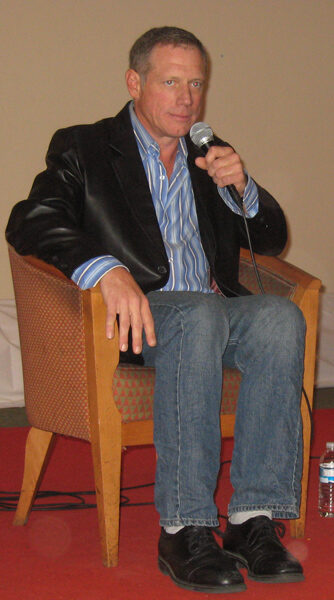
Fredric Lehne
Fredric Lehne is an American actor. Born February 3, 1959, in Buffalo.
Facts
7 facts · 1 confirmed by two sources · 0 cited · 6 from one source
Where this comes from
Papalocal keeps its own record. It started from these sources; what each one said is kept here as it was copied, so a change on their side never changes this page by itself. Tap one to read its version.
What Wikidata says · copied November 16, 2026 · revision 2561467547
- Described as
- American actor
- Other names
- Fredric George Lehne
- Born
- February 3, 1959
- Born in
- Buffalo
- Citizen of
- United States
- Occupation
- actor; television actor; stage actor; film actor
- Wikipedias with a page
- 22
Wikidata item Q1364838 (wikidata.org/wiki/Q1364838), public domain (CC0). Copied November 16, 2026.
What Wikipedia says · copied November 16, 2026 · revision 1376195005
Fredric Lehne (born February 3, 1959) (sometimes credited as Fredric Lane) is an American actor of film, stage, voice and television.
Acting since 1978, he has appeared in more than 200 films, miniseries, and television episodes, as well as stage productions across the United States, from Broadway to Portland, Oregon. He is best known for his role as the demon Azazel on the long-running television show Supernatural, and has also appeared as Marshal Edward Mars on Lost, as Eddie in the original television series Dallas, and as Frank McCann on American Horror Story.
Lehne appeared in such miniseries/television movies as the original Billionaire Boys Club, From the Earth to the Moon and Coward of the County. His film credits include Ordinary People, Being There, Men in Black, Con Air, Zero Dark Thirty, and The Dark Knight Rises.
- Born, in its opening lines
- February 3, 1959
From the Wikipedia article “Fredric Lehne” (en.wikipedia.org/wiki/Fredric_Lehne), by its contributors, under CC BY-SA 4.0 (creativecommons.org/licenses/by-sa/4.0/). Copied November 16, 2026; not changed.
Confirmed Two sources agree. Cited One source, and it names where it got it. One source One source, without a reference of its own. Sources disagree The sources disagree. We show the best-supported value and keep theirs below.
