
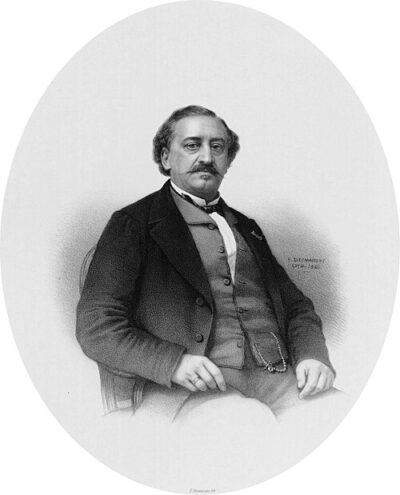
Friedrich von Flotow
Friedrich von Flotow was a German composer. Born April 27, 1812, in Teutendorf. Died January 24, 1883, in Darmstadt. Known for Martha. Educated at Conservatoire de Paris.
Facts
21 facts · 2 confirmed by two sources · 4 cited · 15 from one source
Where this comes from
Papalocal keeps its own record. It started from these sources; what each one said is kept here as it was copied, so a change on their side never changes this page by itself. Tap one to read its version.
What Wikidata says · copied November 16, 2026 · revision 2569996528
- Described as
- German composer (1812–1883)
- Born
- April 27, 1812 · 7 references
- Died
- January 24, 1883 · 12 references
- Born in
- Teutendorf · 1 reference
- Died in
- Darmstadt · 3 references
- Buried in
- Darmstadt
- Citizen of
- Grand Duchy of Mecklenburg-Schwerin
- Occupation
- composer · 1 reference; choreographer; theatre manager · 1 reference
- Worked for
- Mecklenburg State Theatre
- Education
- Conservatoire de Paris
- Genre
- opera
- Known for
- Martha
- Spouse
- Elisabeth von Zadow (1849–1851); Anna Theen (1855–); Rosina von Zadow (1868–)
- Children
- Martha von Flotow; Anna Barbara von Flotow
- Father
- Wilhelm von Flotow
- Mother
- Caroline Sophie Rahel von Böckmann
- Siblings
- Bernhardine Rößner
- Wikipedias with a page
- 30
Wikidata item Q155425 (wikidata.org/wiki/Q155425), public domain (CC0). Copied November 16, 2026.
What Wikipedia says · copied November 16, 2026 · revision 1351352642
Friedrich Adolf Ferdinand, Freiherr von Flotow (German: [ˈfʁiːdʁɪç fɔn ˈfloːto]; 27 April 1812 – 24 January 1883) was a German composer. He is chiefly remembered for his opera Martha, which was popular in the 19th century and the early part of the 20th.
- Born, in its opening lines
- April 27, 1812
- Died, in its opening lines
- January 24, 1883
From the Wikipedia article “Friedrich von Flotow” (en.wikipedia.org/wiki/Friedrich_von_Flotow), by its contributors, under CC BY-SA 4.0 (creativecommons.org/licenses/by-sa/4.0/). Copied November 16, 2026; not changed.
Confirmed Two sources agree. Cited One source, and it names where it got it. One source One source, without a reference of its own. Sources disagree The sources disagree. We show the best-supported value and keep theirs below.
