
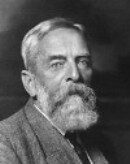
Friedrich von Wieser
Friedrich von Wieser was an Austrian economist. Born July 10, 1851, in Vienna. Died July 22, 1926, in Brunnwinkl. Positions held include Federal minister (Austria) and Member of the House of Lords (Austria) (1917–). Educated at University of Vienna. Awards include honorary doctor of the University of Vienna.
Facts
19 facts · 2 confirmed by two sources · 6 cited · 11 from one source
Where this comes from
Papalocal keeps its own record. It started from these sources; what each one said is kept here as it was copied, so a change on their side never changes this page by itself. Tap one to read its version.
What Wikidata says · copied November 16, 2026 · revision 2568224637
- Described as
- Austrian economist (1851-1926)
- Other names
- Friedrich Wieser, Friedrich Freiherr von Wieser, Wieser
- Born
- July 10, 1851 · 6 references
- Died
- July 22, 1926 · 3 references
- Born in
- Vienna · 2 references
- Died in
- Brunnwinkl · 3 references
- Buried in
- Dornbacher Cemetery
- Citizen of
- Austria–Hungary; Austria
- Occupation
- economist · 1 reference; pedagogue; university teacher; politician · 1 reference; jurist · 1 reference
- Positions held
- Federal minister (Austria); Member of the House of Lords (Austria) (1917–) · 1 reference
- Worked for
- University of Vienna; Charles University
- Education
- University of Vienna
- Awards
- honorary doctor of the University of Vienna · 1 reference
- Siblings
- Joseph Wieser
- Wikipedias with a page
- 44
Wikidata item Q84482 (wikidata.org/wiki/Q84482), public domain (CC0). Copied November 16, 2026.
What Wikipedia says · copied November 16, 2026 · revision 1384861539
Friedrich von Wieser (German: [fɔn ˈviːzɐ]; 10 July 1851 – 22 July 1926) was an Austrian economist.
Born in Vienna, the son of Privy Councillor Leopold von Wieser, a high official in the war ministry, he first trained in sociology and law. In 1872, the year he took his degree, he encountered Austrian-school founder Carl Menger's Grundsätze and switched his interest to economic theory. Wieser held posts at the universities of Vienna and Prague until succeeding Menger in Vienna in 1903, where along with his brother-in-law Eugen von Böhm-Bawerk he shaped the next generation of Austrian economists including Ludwig von Mises, Friedrich Hayek and Joseph Schumpeter in the late 1890s and early 20th century. He was the Austrian Minister of Commerce from August 30, 1917, to November 11, 1918.
Wieser is renowned for two main works, Natural Value, which carefully details the alternative-cost doctrine and the theory of imputation; and his Social Economics (1914), an ambitious attempt to apply it to the real world. His explanation of marginal utility theory was decisive, at least terminologically. It was his term Grenznutzen (building on von Thünen's Grenzkosten) that developed into the standard term "marginal utility", not William Stanley Jevons's "final degree of utility" or Menger's "value". His use of the modifier "natural" indicates that he regarded value as a "natural category" that would pertain to any society, no matter what institutions of property had been established.
The economic calculation debate started with his notion of the paramount importance of accurate calculation to economic efficiency. Above all, to him prices represented information about market conditions and are thus necessary for any sort of economic activity. Therefore, a socialist economy would require a price system in order to operate. He also stressed the importance of the entrepreneur to economic change, which he saw as being brought about by "the heroic intervention of individual men who appear as leaders toward new economic shores". This idea of leadership was later taken up by Joseph Schumpeter in his treatment of economic innovation.
Unlike most other Austrian School economists, Wieser rejected classical liberalism, writing that "freedom has to be superseded by a system of order". This vision and his general solution to the role of the individual in history is best expressed in his final book The Law of Power, a sociological examination of political order published in his last year of life.
- Born, in its opening lines
- July 10, 1851
- Died, in its opening lines
- July 22, 1926
From the Wikipedia article “Friedrich von Wieser” (en.wikipedia.org/wiki/Friedrich_von_Wieser), by its contributors, under CC BY-SA 4.0 (creativecommons.org/licenses/by-sa/4.0/). Copied November 16, 2026; not changed.
Confirmed Two sources agree. Cited One source, and it names where it got it. One source One source, without a reference of its own. Sources disagree The sources disagree. We show the best-supported value and keep theirs below.
