
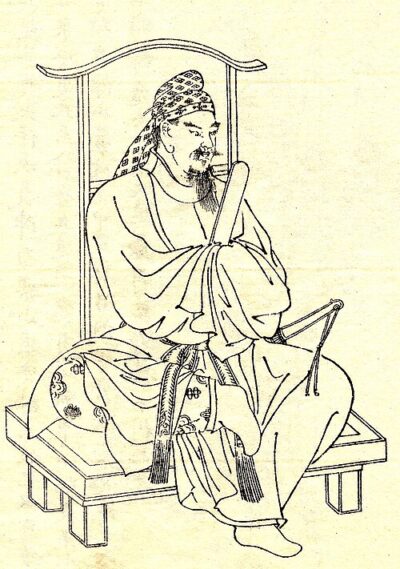
Fujiwara no Kamatari
Fujiwara no Kamatari, born Nakatomi no Kamatari, was a prominent Japanese politician and noble who lived from 614 to 669. He played a pivotal role in the Taika Reform of 645, working alongside Prince Naka no Ōe (later Emperor Tenji). This reform aimed to centralize and enhance the power of the Japanese central government.
Kamatari is recognized as the founder of the Fujiwara clan, an aristocratic lineage that would achieve significant influence in Japan during the Nara and Heian periods. Shortly before his death, he was granted the surname Fujiwara and the title Taishokan by Emperor Tenji, solidifying the foundation of his influential family.
Facts
17 facts · 2 confirmed by two sources · 0 cited · 15 from one source
Where this comes from
Papalocal keeps its own record. It started from these sources; what each one said is kept here as it was copied, so a change on their side never changes this page by itself. Tap one to read its version.
What Wikidata says · copied November 13, 2026 · revision 2562622535
- Described as
- Japanese noble (614-669)
- Other names
- Nakatomi no Kamatari
- Born
- 614 · 3 references
- Died
- November 14, 669 · 1 reference
- Buried in
- Abuyama Kofun · 1 reference
- Citizen of
- Japan
- Occupation
- politician
- Positions held
- Naidaijin (645–669)
- Spouse
- Kagami no Ōsemi; NN · 1 reference; NN Fujiwara · 1 reference
- Children
- Jōe; Fujiwara no Fuhito; Fujiwara no Mimimotoji; Hikami no Iratsume; Ioe no Iratsume; Daughter of Fujiwara no Tōme
- Father
- Nakatomi no Mikeko
- Mother
- Ōtomo no Chisen no Iratsume
- Wikipedias with a page
- 28
Wikidata item Q433995 (wikidata.org/wiki/Q433995), public domain (CC0). Copied November 13, 2026.
What Wikipedia says · copied November 14, 2026 · revision 1381190042
Fujiwara no Kamatari (藤原 鎌足; Japanese pronunciation: [ɸɯ̈̀.(ɟ̟͡)ʑí.β̞ä́.ɾä́ nó̞ | kä̀.mä́.tä̀.ɾʲï̀, -nó̞ kä́-, -tä́.ɾʲí]; 614 – November 14, 669), also known as Nakatomi no Kamatari (中臣 鎌足), was a Japanese politician and aristocrat who, together with Prince Naka no Ōe (later Emperor Tenji), carried out the Taika Reform. He was the founder of the Fujiwara clan, the most powerful aristocratic family in Japan during the Nara and Heian periods. Before his birth, the Soga clan, defenders of Buddhism in the Asuka period, defeated the Mononobe clan and the Nakatomi clan, and Buddhism became the dominant religion of the Imperial Court. Kamatari was appointed Inner Minister, and, along with Prince Naka no Ōe, later Emperor Tenji (626–672), launched the Taika Reform of 645, which centralized and strengthened the central government. Just before his death, he received the surname Fujiwara and the rank Taishokan from Emperor Tenji, thus establishing the Fujiwara clan.
- Born, in its opening lines
- 614
- Died, in its opening lines
- November 14, 669
From the Wikipedia article “Fujiwara no Kamatari” (en.wikipedia.org/wiki/Fujiwara_no_Kamatari), by its contributors, under CC BY-SA 4.0 (creativecommons.org/licenses/by-sa/4.0/). Copied November 14, 2026; not changed.
Confirmed Two sources agree. Cited One source, and it names where it got it. One source One source, without a reference of its own. Sources disagree The sources disagree. We show the best-supported value and keep theirs below.
