
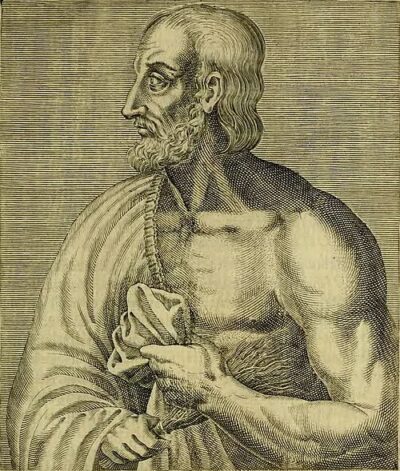
Fulk III, Count of Anjou was a Count of Anjou. Born 970. Died June 21, 1040, in Metz. Positions held include Count of Anjou.
Facts
15 facts · 2 confirmed by two sources · 0 cited · 13 from one source
Where this comes from
Papalocal keeps its own record. It started from these sources; what each one said is kept here as it was copied, so a change on their side never changes this page by itself. Tap one to read its version.
What Wikidata says · copied November 17, 2026 · revision 2553932917
- Described as
- Count of Anjou
- Other names
- Fulk III Nerra, Foulque Nerra, Comte d' Anjou Foulques Nerra, Fulk Nerra, Count of Anjou Fulk III Nerra, Foulques Nerra, Count of Anjou Foulque III Nerra, Fulko Nerra, Foulques le Noir, Count of Anjou Foulques III Nerra, Fulk the Black
- Born
- 970
- Died
- June 21, 1040
- Died in
- Metz
- Buried in
- Centre-Val de Loire
- Occupation
- aristocrat
- Positions held
- Count of Anjou
- Spouse
- Hildegard of Sundgau (1000–); Elisabeth de Vendôme (989–)
- Children
- Ermengarde of Anjou, Duchess of Burgundy; Geoffrey II, Count of Anjou; Adèle de Vendôme-Anjou
- Father
- Geoffrey I, Count of Anjou
- Mother
- Adele of Meaux
- Siblings
- Ermengarde-Gerberga of Anjou; Gerberge d'Anjou · 1 reference
- Wikipedias with a page
- 26
Wikidata item Q454017 (wikidata.org/wiki/Q454017), public domain (CC0). Copied November 17, 2026.
What Wikipedia says · copied November 17, 2026 · revision 1364380662
Fulk III (c. 970 – 21 June 1040), known as Fulk the Black or Fulk Nerra (Old French: Foulque Nerra), was an early count of Anjou, celebrated as one of the first great builders of medieval castles. It is estimated Fulk constructed approximately 100 castles as well as abbeys throughout the Loire Valley. He fought successive wars with neighbors in Brittany, Blois, Poitou and Aquitaine and made four pilgrimages to Jerusalem during the course of his life. He had two wives and three children.
Fulk was a natural horseman and fearsome warrior with a keen sense of military strategy that bested most of his opponents. He was allied with the goals and aims of the Capetians against the dissipated Carolingians of his era. With his county seat at Angers, Fulk's bitter enemy was Odo II of Blois, his neighbor 128 km east along the Loire river, at Tours. The two men traded towns, followers and insults throughout their lives.
Fulk finished his first castle at Langeais, 104 km east of Angers, on the banks of the Loire. Like many of his constructions, it began as a wooden tower, and was eventually replaced with a stone structure, fortified with exterior walls, and equipped with a thick-walled tower called a donjon in French (source of the English word "dungeon", which, however, implies a cellar rather than a tower). He built it in the territory of Odo I, Count of Blois, and they fought a battle over it in 994. But Odo I died of a sudden illness, and his son and successor, Odo II, did not manage to evict Fulk.
Fulk continued building more towers in a slow encirclement of Tours: Montbazon, Montrésor, Mirebeau, Montrichard, Loches, and even the tower of Montboyau, erected just across the Loire from Tours in 1016. He also fortified the castles at Angers, Amboise, Chateau-Gontier, Chinon, Mayenne and Semblançay, among many others. "The construction of castles for the purpose of extending a ruler's power was part of Fulk Nerra's strategy," wrote Peter Fraser Purton, in A History of Medieval Siege, c. 450–1220.
Although some sources refer to Fulk as "a devout Christian" (who built, enlarged or endowed several abbeys and monasteries, such as the Abbey of Beaulieu-lès-Loches, Saint-Florent-le-Vieil, Saint-Aubin, and a convent, Notre Dame de la Charité, at Ronceray in Angers), others explain this fever to build Christian buildings, as his desperate attempt to ensure his salvation, after a life of ruthless violence against both his political enemies, and his own family members. Although he never learned to write, he endowed a school with revenue to provide poor students with an education. Fulk also undertook four pilgrimages to Jerusalem.
- Born, in its opening lines
- c. 970
- Died, in its opening lines
- June 21, 1040
From the Wikipedia article “Fulk III of Anjou” (en.wikipedia.org/wiki/Fulk_III_of_Anjou), by its contributors, under CC BY-SA 4.0 (creativecommons.org/licenses/by-sa/4.0/). Copied November 17, 2026; not changed.
Confirmed Two sources agree. Cited One source, and it names where it got it. One source One source, without a reference of its own. Sources disagree The sources disagree. We show the best-supported value and keep theirs below.
