
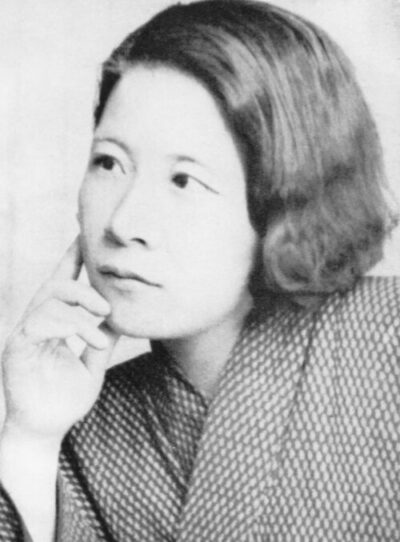
Fumiko Hayashi
Fumiko Hayashi was a Japanese writer. Born December 31, 1903, in Shimonoseki. Died June 28, 1951, in Tokyo. Educated at Hiroshima Prefectural Onomichihigashi High School. Awards include Female Literary Award.
Facts
13 facts · 2 confirmed by two sources · 4 cited · 7 from one source
What’s different
- Died: we show June 28, 1951 (Confirmed). Wikidata also lists June 29, 1951
Where this comes from
Papalocal keeps its own record. It started from these sources; what each one said is kept here as it was copied, so a change on their side never changes this page by itself. Tap one to read its version.
What Wikidata says · copied November 17, 2026 · revision 2557888648
- Described as
- Japanese writer (1903–1951)
- Other names
- Hayashi Fumiko
- Born
- December 31, 1903 · 2 references
- Died
- June 29, 1951 · 1 reference; June 28, 1951 · 3 references
- Born in
- Shimonoseki · 2 references
- Died in
- Tokyo · 1 reference
- Citizen of
- Japan · 1 reference; Empire of Japan (–1947)
- Occupation
- novelist; poet; writer · 2 references; screenwriter
- Education
- Hiroshima Prefectural Onomichihigashi High School
- Awards
- Female Literary Award (1948)
- Field
- poetry
- Wikipedias with a page
- 25
Wikidata item Q445839 (wikidata.org/wiki/Q445839), public domain (CC0). Copied November 17, 2026.
What Wikipedia says · copied November 17, 2026 · revision 1371751203
Fumiko Hayashi (林芙美子, Hayashi Fumiko; December 31, 1903 – June 28, 1951) was a Japanese writer of novels, short stories and poetry, who has repeatedly been included in the feminist literature canon. Among her best-known works are Diary of a Vagabond, Late Chrysanthemum and Floating Clouds.
- Born, in its opening lines
- December 31, 1903
- Died, in its opening lines
- June 28, 1951
From the Wikipedia article “Fumiko Hayashi (author)” (en.wikipedia.org/wiki/Fumiko_Hayashi_(author)), by its contributors, under CC BY-SA 4.0 (creativecommons.org/licenses/by-sa/4.0/). Copied November 17, 2026; not changed.
Confirmed Two sources agree. Cited One source, and it names where it got it. One source One source, without a reference of its own. Sources disagree The sources disagree. We show the best-supported value and keep theirs below.
