
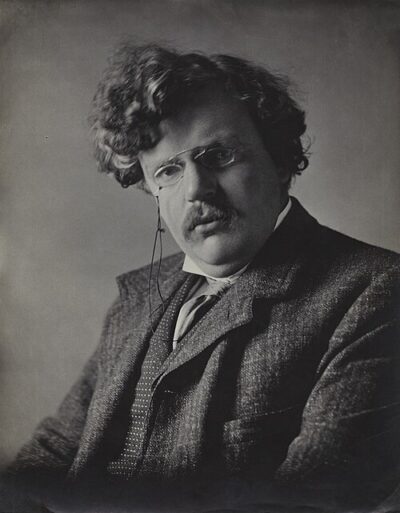
G. K. Chesterton
G. K. Chesterton was an English author and Christian apologist. Born May 29, 1874, in Kensington. Died June 14, 1936, in Beaconsfield. Positions held include chairperson (1930–1936). Known for The Club of Queer Trades, The Man Who Was Thursday and Orthodoxy. Educated at University College London and Slade School of Fine Art. Awards include Knight Grand Officer of the Order of St. Gregory the Great.
Facts
39 facts · 2 confirmed by two sources · 20 cited · 17 from one source
Where this comes from
Papalocal keeps its own record. It started from these sources; what each one said is kept here as it was copied, so a change on their side never changes this page by itself. Tap one to read its version.
What Wikidata says · copied November 16, 2026 · revision 2567476495
- Described as
- English author and Christian apologist (1874–1936)
- Other names
- Gilbert K. Chesterton, G.K. Chesterton, G. K. C., Gilbert Keith Chesterton, Gilbert Chesterton
- Born
- May 29, 1874 · 21 references
- Died
- June 14, 1936 · 20 references
- Born in
- Kensington · 1 reference
- Died in
- Beaconsfield · 2 references
- Buried in
- Buckinghamshire · 1 reference
- Cause of death
- heart failure
- Citizen of
- United Kingdom
- Occupation
- journalist · 2 references; poet · 3 references; novelist; autobiographer; writer · 4 references; screenwriter; philosopher; biographer
- Positions held
- chairperson (1930–1936)
- Education
- University College London · 1 reference; Slade School of Fine Art · 1 reference; St Paul's School · 1 reference; Colet Court · 2 references
- Genre
- essay
- Known for
- The Club of Queer Trades; The Man Who Was Thursday; Orthodoxy; The Everlasting Man; The Napoleon of Notting Hill · 1 reference; Father Brown · 1 reference
- Awards
- Knight Grand Officer of the Order of St. Gregory the Great
- Field
- theology · 1 reference; Christian apologetics · 1 reference; literary criticism · 1 reference; art criticism · 1 reference; poetry · 1 reference; prose · 1 reference
- Spouse
- Frances Chesterton (1901–) · 2 references
- Siblings
- Cecil Chesterton · 1 reference
- Religion
- Catholicism · 1 reference; Anglicanism (–1922) · 1 reference
- Website
- https://chesterton.org
- Wikipedias with a page
- 118
Wikidata item Q183167 (wikidata.org/wiki/Q183167), public domain (CC0). Copied November 16, 2026.
What Wikipedia says · copied November 16, 2026 · revision 1384275484
Gilbert Keith Chesterton (29 May 1874 – 14 June 1936) was an English journalist, novelist, essayist, poet, and Christian apologist. Chesterton's wit, paradoxical style, and defence of tradition made him a dominant figure in early 20th-century literature.
Chesterton created the fictional priest-detective Father Brown and wrote on apologetics in works such as Orthodoxy and The Everlasting Man. Chesterton routinely referred to himself as an orthodox Christian and came to identify this position more and more with Catholicism, eventually converting from Anglicanism. Biographers have identified him as a successor to such Victorian authors as Matthew Arnold, Thomas Carlyle, John Henry Newman and John Ruskin.
Chesterton has been referred to as the "prince of paradox". Of his writing style, Time magazine observed: "Whenever possible, Chesterton made his points with popular sayings, proverbs, allegories—first carefully turning them inside out." His writings were an influence on Jorge Luis Borges, who compared Chesterton's work with that of Edgar Allan Poe.
- Born, in its opening lines
- May 29, 1874
- Died, in its opening lines
- June 14, 1936
From the Wikipedia article “G. K. Chesterton” (en.wikipedia.org/wiki/G._K._Chesterton), by its contributors, under CC BY-SA 4.0 (creativecommons.org/licenses/by-sa/4.0/). Copied November 16, 2026; not changed.
Confirmed Two sources agree. Cited One source, and it names where it got it. One source One source, without a reference of its own. Sources disagree The sources disagree. We show the best-supported value and keep theirs below.
