
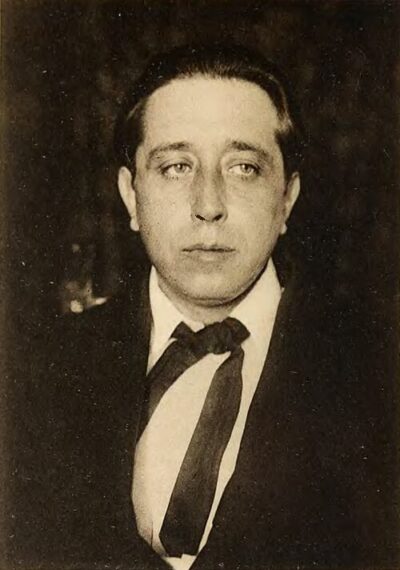
Gabriel Miró
Gabriel Miró was a Spanish author. Born July 28, 1879, in Alicante. Died May 27, 1930, in Madrid. Educated at University of Valencia and University of Granada. Awards include Mariano de Cavia' Price and Chronicler of the City of Barcelona.
Facts
13 facts · 1 confirmed by two sources · 4 cited · 7 from one source · 1 where the sources disagree
What’s different
- Died: we show May 27, 1930 (Sources disagree). Wikipedia says May 24, 1930
Where this comes from
Papalocal keeps its own record. It started from these sources; what each one said is kept here as it was copied, so a change on their side never changes this page by itself. Tap one to read its version.
What Wikidata says · copied November 18, 2026 · revision 2567361593
- Described as
- Spanish author (1879–1930)
- Other names
- Gabriel Miró i Ferrer, Gabriel Miro, Gabriel Miro i Ferrer, Gabriel Miró Ferrer
- Born
- July 28, 1879 · 4 references
- Died
- May 27, 1930 · 5 references
- Born in
- Alicante
- Died in
- Madrid · 1 reference
- Buried in
- La Almudena Cemetery · 1 reference
- Name at birth
- Gabriel Francisco Víctor Miró y Ferrer
- Citizen of
- Spain · 1 reference
- Occupation
- writer · 1 reference; civil servant
- Education
- University of Valencia; University of Granada
- Awards
- Mariano de Cavia' Price (1925); Chronicler of the City of Barcelona (1919)
- Wikipedias with a page
- 20
Wikidata item Q616515 (wikidata.org/wiki/Q616515), public domain (CC0). Copied November 18, 2026.
What Wikipedia says · copied November 18, 2026 · revision 1310420838
Gabriel Miró Ferrer (; Alicante, 28 July 1879 – Madrid, 24 May 1930), known as Gabriel Miró, was a Spanish modernist writer. In 1900 he finished his studies in law at the University of Granada and the University of Valencia. He focused mainly on writing novels, but also collaborated to a large number of newspapers such as: El Heraldo, Los Lunes de El Imparcial, ABC and El Sol. He was among the contributors of the Madrid-based avant-garde magazine Prometeo between 1908 and 1912. The rich and poetic language, the philosophical and theological ideas, and the subtle irony are some of the main characteristics of his works. Gabriel Miró preferred to focus on the intimate world of his characters and its development, in the inner relations between everything in their surrounding and the way they evolve in time.
He is the author of more than 20 novels. Most critics believe that Gabriel Miró's literary maturity begins with Las cerezas del cementerio (Cemetery cherries) (1910), whose plot revolves around the tragic love of the super-sensitive young man Félix Valdivia for an older woman (Beatriz) and presents—with an atmosphere of voluptuousness and lyrical intimism—the themes of eroticism, illness, and death.
- Born, in its opening lines
- July 28, 1879
- Died, in its opening lines
- May 24, 1930
From the Wikipedia article “Gabriel Miró” (en.wikipedia.org/wiki/Gabriel_Miró), by its contributors, under CC BY-SA 4.0 (creativecommons.org/licenses/by-sa/4.0/). Copied November 18, 2026; not changed.
Confirmed Two sources agree. Cited One source, and it names where it got it. One source One source, without a reference of its own. Sources disagree The sources disagree. We show the best-supported value and keep theirs below.
