
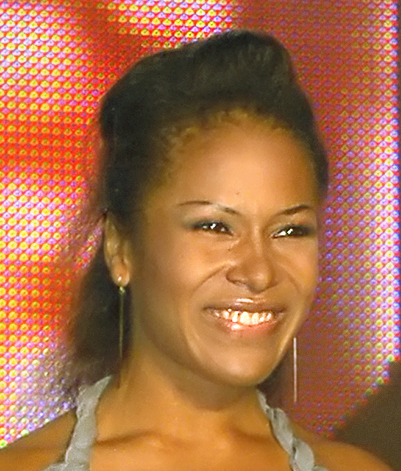
Gaitana is an Ukrainian singer. Born September 29, 1979, in Kyiv.
Facts
16 facts · 0 confirmed by two sources · 1 cited · 14 from one source · 1 where the sources disagree
What’s different
- Born: we show September 29, 1979 (Sources disagree). Wikipedia says March 24, 1979
Where this comes from
Papalocal keeps its own record. It started from these sources; what each one said is kept here as it was copied, so a change on their side never changes this page by itself. Tap one to read its version.
What Wikidata says · copied November 16, 2026 · revision 2541507877
- Described as
- Ukrainian singer
- Born
- September 29, 1979
- Born in
- Kyiv
- Citizen of
- Ukraine; Republic of the Congo
- Occupation
- singer; composer; singer-songwriter · 1 reference
- Genre
- pop music; soul; jazz; folk-pop; funk
- Instrument
- voice
- Field
- music composing
- Website
- http://gaitana.com; http://gaitana.com/en/
- Wikipedias with a page
- 39
Wikidata item Q209845 (wikidata.org/wiki/Q209845), public domain (CC0). Copied November 16, 2026.
What Wikipedia says · copied November 16, 2026 · revision 1371008961
Gaita-Lurdes Klaverivna Essami (Ukrainian: Гайта-Лурдес Клаверівна Ессамі; born 24 March 1979), known professionally as Gaitana (Ukrainian: Гайтана), is a Ukrainian singer and songwriter. Essami's style of pop music has been described as containing elements of jazz, funk, soul, and folk. She represented Ukraine in the Eurovision Song Contest 2012 in Baku, performing the song "Be My Guest" and placing 15th in the final.
Gaitana is the third Eurovision contestant of African origin ever to be born in the former USSR, after Lithuanian singer and guitarist Viktoras "Victor" Diawara of LT United and Estonian singer Daana Ots of Suntribe.
- Born, in its opening lines
- March 24, 1979
From the Wikipedia article “Gaitana (singer)” (en.wikipedia.org/wiki/Gaitana_(singer)), by its contributors, under CC BY-SA 4.0 (creativecommons.org/licenses/by-sa/4.0/). Copied November 16, 2026; not changed.
Confirmed Two sources agree. Cited One source, and it names where it got it. One source One source, without a reference of its own. Sources disagree The sources disagree. We show the best-supported value and keep theirs below.
