
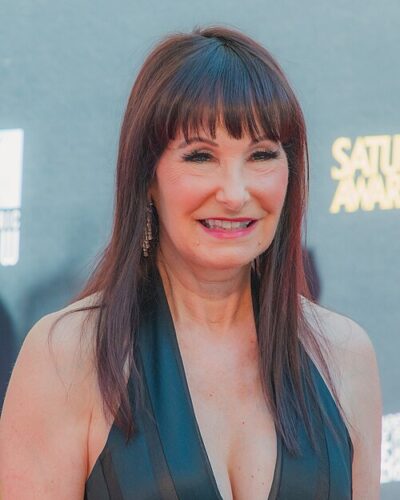
Gale Anne Hurd
Gale Anne Hurd is an American film producer and screenwriter. Born October 25, 1955, in Los Angeles. Educated at Stanford University. Awards include Crystal Award, Saturn Awards and 12th Saturn Awards.
Facts
18 facts · 1 confirmed by two sources · 4 cited · 13 from one source
Where this comes from
Papalocal keeps its own record. It started from these sources; what each one said is kept here as it was copied, so a change on their side never changes this page by itself. Tap one to read its version.
What Wikidata says · copied November 15, 2026 · revision 2562772867
- Described as
- American film producer and screenwriter (born 1955)
- Other names
- Valhalla Motion Pictures
- Born
- October 25, 1955
- Born in
- Los Angeles
- Citizen of
- United States
- Occupation
- film producer · 1 reference; screenwriter · 1 reference; economist; executive producer; television producer · 1 reference; producer · 1 reference
- Education
- Stanford University
- Awards
- Crystal Award (1998) · 1 reference; Saturn Awards · 1 reference; 12th Saturn Awards · 1 reference; star on Hollywood Walk of Fame · 1 reference
- Spouse
- James Cameron (1985–1989); Brian De Palma (1991–1993); Jonathan Hensleigh (1995–)
- Children
- Lolita de Palma
- Wikipedias with a page
- 32
Wikidata item Q269895 (wikidata.org/wiki/Q269895), public domain (CC0). Copied November 15, 2026.
What Wikipedia says · copied November 15, 2026 · revision 1379573948
Gale Anne Hurd (born October 25, 1955) is an American film and television producer, the founder of Valhalla Entertainment (formerly Pacific Western Productions), and a former recording secretary for the Producers Guild of America. Her notable works include The Terminator (1984), Aliens (1986), The Abyss (1989), Armageddon (1998), Mankiller (2017) and The Walking Dead (2010–2022).
- Born, in its opening lines
- October 25, 1955
From the Wikipedia article “Gale Anne Hurd” (en.wikipedia.org/wiki/Gale_Anne_Hurd), by its contributors, under CC BY-SA 4.0 (creativecommons.org/licenses/by-sa/4.0/). Copied November 15, 2026; not changed.
Confirmed Two sources agree. Cited One source, and it names where it got it. One source One source, without a reference of its own. Sources disagree The sources disagree. We show the best-supported value and keep theirs below.
